
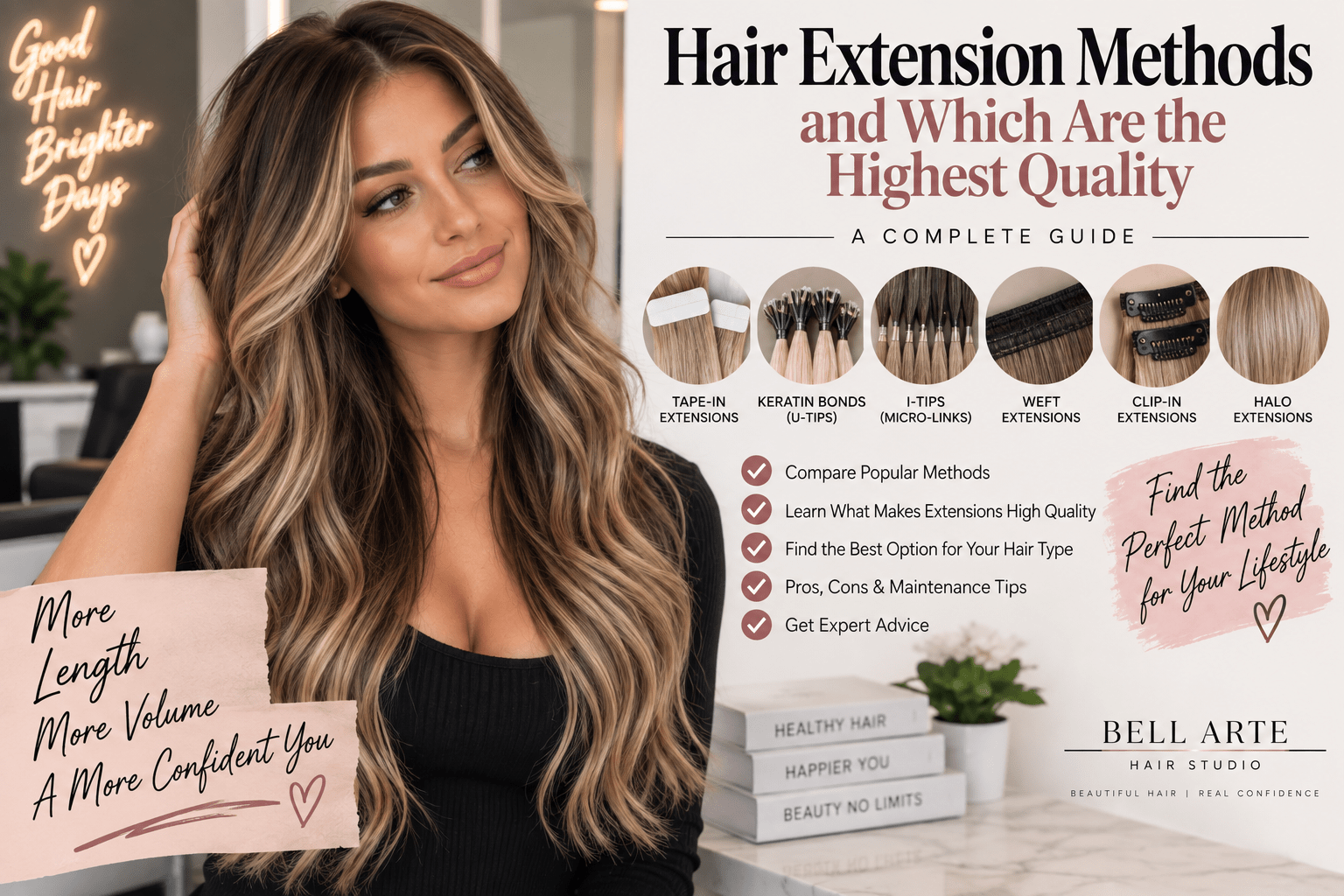
Hair Extension Methods: Choosing Quality Hair Extensions
Choosing between today’s many hair extension methods can feel overwhelming. Salons offer tape-ins, keratin bonds, I-tips, wefts, clip-ins, halos, and other options. At the same time, the quality of the extension hair itself can vary dramatically.
Finding quality hair extensions requires more than simply choosing the longest or most expensive hair. You need to consider hair quality, installation method, your natural hair density, maintenance requirements, styling habits, and lifestyle.
Whether you want additional length, more volume, or a completely new look, this guide compares popular hair extension methods and explains what to look for when choosing premium extension hair.
What Makes Quality Hair Extensions?
Before comparing application techniques, start with the extension hair itself. The quality of the hair affects how naturally it blends, how well it styles, and how long it can remain beautiful with proper care.
One of the biggest decisions involves choosing between human hair and synthetic extensions. Synthetic fibers can provide an affordable temporary option, but they generally offer fewer styling possibilities than human hair.
Human hair can provide more natural movement and greater styling flexibility. However, not all human hair extensions offer the same quality.
Why Remy Hair Is a Premium Choice
Remy human hair remains one of the most popular choices for quality hair extensions. With Remy hair, manufacturers preserve the hair cuticles and keep them aligned in the same direction.
Cuticle alignment helps the strands move together more naturally. It can also reduce unnecessary tangling and matting when you care for the hair correctly.
Virgin human hair represents another premium category. The term generally refers to human hair that has not undergone chemical processing such as coloring, bleaching, or perming.
If you are considering premium extensions, learn more about professional human hair extensions in Tampa and how Bell Arte Hair Studio approaches personalized extension services.
Popular Hair Extension Methods
The best extension hair will not produce the desired result if the application method does not suit your natural hair or lifestyle. Let’s compare some of today’s most popular hair extension methods.
Tape-In Hair Extensions
Tape-in extensions use thin wefts of extension hair with professional adhesive tabs. A stylist places sections of natural hair between the extension pieces to create a flat attachment.
Tape-ins can provide a natural-looking result while keeping the attachment relatively flat against the head.
Advantages of Tape-In Extensions
- Relatively fast professional installation.
- Flat attachment points that can remain discreet.
- Good option for adding both length and volume.
- Extension hair may be reusable when properly maintained.
Considerations With Tape-Ins
- They require regular professional maintenance as natural hair grows.
- Heavy oils and conditioners around the adhesive can contribute to slipping.
- Correct placement matters for comfortable wear and natural movement.
Keratin Bond Hair Extensions
Keratin extensions, often called K-tips or fusion extensions, use small individual strands. A stylist attaches each extension to a section of natural hair with a keratin-based bond.
Because the stylist installs individual strands rather than wide wefts, keratin extensions can provide excellent movement. They also allow strategic placement throughout the hair.
Clients who enjoy ponytails and other hairstyles often appreciate the flexibility that individual strand hair extension methods can provide.
Wear time varies according to natural hair growth, installation, maintenance, and the stylist’s recommendations.
I-Tip and Micro-Link Extensions
I-tip extensions use individual extension strands and small beads instead of keratin adhesive. A stylist threads a section of natural hair through the bead, inserts the extension strand, and secures the attachment.
This method does not require heat to create the attachment. It also allows the stylist to work with individual sections of hair.
Correct sizing and weight distribution matter. A professional should match each extension strand to an appropriate amount of natural hair.
Wefts and Beaded Row Hair Extension Methods
Weft extensions consist of hair attached along a track. A stylist then integrates the weft with the client’s natural hair using a professional installation technique.
Different weft systems may use beads, thread, braids, or a combination of techniques. The specific method should match the client’s natural hair density and desired result.
Hand-Tied Wefts
Hand-tied wefts have a thin construction that can create a lightweight and flexible attachment. Their low-profile design can help them lie naturally against the head when installed correctly.
Machine Wefts
Machines create machine wefts, which typically makes them somewhat thicker than hand-tied alternatives. Their construction can make them durable and useful for clients who need substantial volume.
Neither option automatically represents the best choice for every client. Your natural hair, desired volume, scalp sensitivity, and maintenance preferences should guide the decision.
Temporary Hair Extension Methods
Not everyone wants permanent or semi-permanent extensions. Temporary options can add length and volume without requiring regular salon move-up appointments.
Clip-In Extensions
Clip-ins use small clips attached to extension wefts. You can install them for a special occasion and remove them before sleeping.
High-quality human hair clip-ins can provide a good introduction to extensions for someone who does not want a long-term commitment.
Halo Hair Extensions
Halo extensions typically use a weft attached to a thin wire that rests around the crown of the head. Your natural hair falls over the wire and helps conceal it.
Because halos do not use adhesive or permanent attachment points, they provide another temporary option for adding volume and length.
Which Hair Extension Method Is Best?
No single extension technique works best for everyone. The ideal choice depends on your natural hair and what you expect from your extensions.
A professional consultation should consider several factors:
- Your natural hair density and texture.
- The condition of your natural hair.
- Your desired length and volume.
- Your preferred hairstyles.
- How often you exercise or swim.
- Your normal hair-care routine.
- Your willingness to attend maintenance appointments.
- Your extension budget.
An experienced extension professional can use these factors to recommend the most appropriate technique instead of automatically choosing the same method for every client.
Bell Arte Hair Studio specializes in personalized extension services. Visit Bell Arte Hair Studio to explore professional hair extension options and consultations.
Quality Hair Extensions for Fine or Thin Hair
Clients with fine or thin natural hair need to pay particular attention to extension weight and placement. Adding too much extension hair to a small amount of natural hair can create unnecessary tension.
The best method depends on the individual’s hair density and condition. Lightweight tape-ins, carefully selected wefts, or other low-weight techniques may work well for some clients.
A stylist should evaluate the natural hair before choosing the amount and placement of extension hair.
The American Academy of Dermatology recommends avoiding extensions that feel painful or excessively tight. Repeated pulling can damage natural hair.
Hair Extension Methods and Scalp Health
Beautiful extensions should not require you to tolerate significant pain. Correct installation and weight distribution play important roles in protecting natural hair.
If extensions continually pull, hurt, or irritate your scalp, contact your stylist. Do not simply assume severe discomfort is a normal part of wearing extensions.
Professional installation, appropriate extension weight, and regular maintenance can help reduce unnecessary tension.
Maintaining Quality Hair Extensions
Even the best quality hair extensions require proper maintenance. Good daily habits can help prevent tangling, dryness, unnecessary pulling, and premature wear.
Wash Your Extensions Carefully
Use hair-care products that work with your particular extension method. Clean your scalp gently without aggressively scrubbing or tangling the attachment areas.
Apply conditioner primarily through the mid-lengths and ends unless your stylist recommends another routine.
Brush Extensions Gently
Use an extension-compatible brush and start at the ends. Gradually work upward while supporting the hair near the attachment areas.
Never aggressively pull a brush through a knot. Instead, gently work through the tangle to minimize stress on your natural hair.
Protect Extensions While Sleeping
Brush your hair before bed and make sure your attachment areas are dry. Depending on your extension method and hair length, your stylist may recommend a loose braid or another protective nighttime style.
A silk or satin pillowcase can also help reduce friction while you sleep.
Use Heat Carefully
Human hair extensions can offer excellent styling flexibility, but repeated high heat can dry and weaken hair.
Use a thermal protectant and the lowest effective heat setting. Avoid placing hot tools directly against tapes, bonds, or other sensitive attachment areas.
The American Academy of Dermatology recommends limiting excessive heat when styling hair to help reduce damage.
Professional Maintenance Matters
Regular salon maintenance plays an important role in keeping extensions looking natural. Your own hair continues to grow, so attachment points gradually move farther away from your scalp.
Your stylist can inspect the extensions during maintenance appointments. They can also identify tangling, slippage, excessive tension, or other problems before they become more serious.
Maintenance schedules vary among hair extension methods. Tape-ins and many weft systems require periodic move-up appointments. Other techniques, including keratin bonds, follow different removal and replacement schedules.
Follow the maintenance schedule your extension professional recommends for your specific installation.
Safe Hair Extension Removal
Professional removal matters just as much as professional installation. Avoid pulling, cutting, or attempting to force permanent extensions out of your natural hair.
Different methods require different removal techniques and tools. A trained extension professional can release bonds, tapes, beads, or wefts while minimizing unnecessary pulling.
Improper removal can cause breakage and place unnecessary tension on natural hair. This is particularly important when extensions have grown out or become tangled near attachment points.
Choosing the Best Quality Hair Extensions
The best extensions combine excellent hair with an installation method suited to the individual client. Premium Remy human hair can provide beautiful movement, styling versatility, and a natural appearance when properly installed and maintained.
However, hair quality represents only one part of the equation. Professional placement, appropriate weight, color matching, blending, maintenance, and at-home care all influence the final result.
When comparing quality hair extensions, consider the hair itself and the expertise of the professional who will install them.
Final Thoughts on Hair Extension Methods
Today’s wide range of hair extension methods makes it possible to customize an extension service around your natural hair, desired style, and lifestyle.
Tape-ins offer flat attachment points and efficient installation. Keratin bonds provide individual strand movement. I-tips offer a bead-based attachment. Wefts can create substantial length and volume. Clip-ins and halos provide temporary alternatives.
Whichever technique you choose, prioritize quality hair extensions, professional installation, proper weight distribution, and consistent maintenance.
The right combination can create beautiful length and volume while maintaining a natural-looking blend with your own hair.