
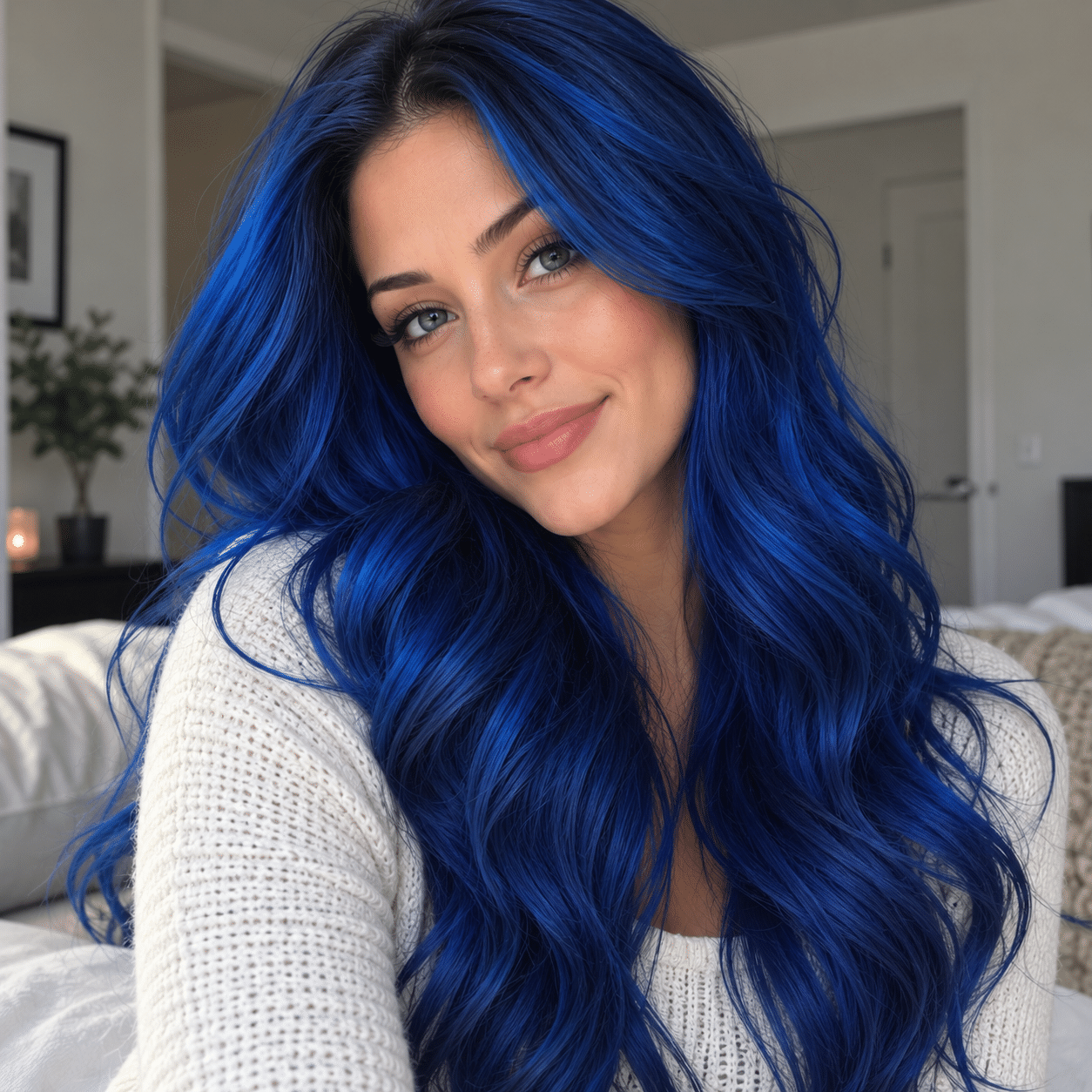
Cobalt Blue Hair Color: Coloring & Maintenance Guide
Cobalt blue hair color creates a rich, vivid blue look that can range from deep jewel-toned blue to an intensely bright fashion shade. Unlike softer pastel blues, cobalt delivers noticeable depth and saturation, making it an excellent choice for anyone who wants a dramatic color transformation.
However, achieving beautiful cobalt blue involves more than simply applying blue dye. Your starting hair color, previous chemical services, hair condition, desired intensity, and maintenance routine can all affect the finished result.
Before committing to cobalt blue, it helps to understand the coloring process and the cobalt blue hair maintenance required to keep the shade looking vibrant.

What Is Cobalt Blue Hair Color?
Cobalt blue is a strong, saturated blue inspired by the intense color traditionally associated with cobalt pigment. On hair, the shade can appear bright electric blue, deep jewel blue, or somewhere between navy and vivid blue depending on the formula and starting base.
The finished color can also change under different lighting. Indoors, cobalt may appear deeper and richer. In natural sunlight, its brighter blue tones can become much more noticeable.
Why Choose Cobalt Blue Hair?
Cobalt blue offers significantly more intensity than natural hair colors and many softer fashion shades. It can also be customized in several ways rather than requiring an identical full-head application for every client.
For example, cobalt blue can be incorporated as:
- Full-head vivid color
- Blue highlights
- Face-framing pieces
- Peekaboo color
- Blue ombre
- Blue balayage-inspired placement
- Color-blocking sections
- Blue ends
- Blue combined with violet or teal
Because the placement can be customized, you can choose anything from a small cobalt accent to a dramatic complete transformation.
Does Hair Need to Be Lightened Before Going Cobalt Blue?
Often, yes. The amount of lightening depends on your natural color, previous hair color, and how bright you want the cobalt blue to appear.
Blue pigment placed over very dark hair may produce only a subtle effect. A lighter base generally allows the blue pigment to appear brighter and more accurately.
However, that doesn’t mean every client should automatically be lightened to the palest possible blonde. Your stylist should evaluate your starting hair and determine the appropriate base for your desired shade.
Cobalt Blue Hair Color on Dark Hair
Brunettes can absolutely explore cobalt blue, although the process may differ from someone starting with naturally light hair.
On darker hair, your stylist may need to lighten selected areas before applying blue. How much lightening is appropriate depends on the desired intensity and the condition of your hair.
If you want a subtle blue effect rather than extremely bright cobalt, maintaining additional depth can create a beautiful dimensional result.
Cobalt Blue Hair Color on Blonde Hair
Blonde hair generally provides a lighter canvas for cobalt pigment. Therefore, the blue may appear more vivid without requiring as much preliminary lightening.
Still, the underlying blonde tone matters.
Hair with strong yellow undertones can interact with blue pigment differently than a more neutral base. Your stylist may need to prepare or adjust the underlying tone before applying the final cobalt formula.
How Previous Hair Color Affects Cobalt Blue Results
Your color history is extremely important when planning a vivid transformation.
Tell your stylist about previous:
- Permanent hair color
- Box dye
- Bleach
- Highlights
- Balayage
- Henna
- Fashion colors
- Color removers
- Keratin or chemical services
Previously colored hair may respond differently from virgin hair. Therefore, an accurate color history helps your stylist create a safer and more realistic plan.
The Cobalt Blue Hair Color Consultation
A consultation is especially useful before a major vivid-color transformation.
Bring several inspiration photographs showing the blue shades you like. Since terms such as cobalt, royal blue, electric blue, and midnight blue can mean different things to different people, photographs provide a clearer visual reference.
During the consultation, discuss your desired brightness, placement, maintenance expectations, previous color history, and normal styling routine.
How Cobalt Blue Hair Color Is Created

The exact process varies depending on your starting point, but a cobalt blue transformation may involve several stages.
Step 1: Evaluate the Hair
Your stylist first evaluates your starting color, condition, texture, density, and previous chemical services.
Step 2: Create the Appropriate Base
If necessary, selected sections or the entire head may need lightening before the cobalt pigment is applied.
The goal is to create an appropriate canvas while considering the integrity of the hair.
Step 3: Apply the Cobalt Blue Formula
Once the base is prepared, your stylist applies the customized blue formula according to the desired placement.
Step 4: Process and Rinse
The color processes for the appropriate amount of time before being carefully rinsed according to the product and technique being used.
Step 5: Style and Evaluate the Finished Color
After drying and styling, your stylist can evaluate the final color in its finished state and discuss your home-maintenance routine.
Full Cobalt Blue Hair vs. Blue Highlights
You don’t necessarily need to color your entire head cobalt blue.
Full cobalt creates the strongest transformation and makes blue the dominant color. In contrast, highlights allow your natural or existing hair color to remain visible between the blue sections.
Highlights may also create more dimension because the blue interacts with the surrounding darker or lighter hair.
Cobalt Blue Face-Framing Highlights
Face-framing cobalt sections offer another option for introducing vivid color without committing to a complete blue transformation.
The blue can be concentrated around the front hairline while the rest of the hair remains closer to your existing shade.
This approach creates noticeable color around the face while limiting the amount of hair that needs to be transformed.
Cobalt Blue Ombre Hair
Cobalt blue can also work beautifully with an ombre design.
Rather than applying blue from roots to ends, your stylist can preserve a deeper root area and transition gradually into blue through the mid-lengths and ends.
This placement can create dramatic contrast while maintaining depth near the scalp.
Cobalt Blue Balayage-Inspired Placement
Customized placement can also create a softer distribution of vivid blue throughout the hair.
Instead of one solid block of color, strategically placed blue sections can create movement and dimension.
Bell Arte Hair Studio also offers professional balayage hair coloring for clients interested in customized dimensional color placement.
Can You Mix Cobalt Blue With Other Hair Colors?
Yes. Cobalt blue can coordinate with several neighboring fashion shades.
Popular combinations can include:
- Cobalt blue and violet
- Cobalt blue and teal
- Blue and turquoise
- Blue and black
- Blue and silver
- Blue with darker navy sections
The colors can be blended, separated into panels, placed as highlights, or transitioned from one shade into another.
Cobalt Blue vs. Teal Hair
Cobalt and teal are both bold fashion colors, but they have noticeably different undertones.
Cobalt is primarily blue, while teal contains a stronger green influence. Therefore, cobalt generally produces a cooler, truer-blue appearance.
Your starting base can also influence how either shade appears once applied.
Cobalt Blue vs. Navy Blue Hair
Navy hair generally appears darker and more subdued than cobalt.
Cobalt typically provides greater brightness and saturation, especially when applied over a properly prepared lighter base.
If you want blue hair that remains relatively dark, navy may be more appropriate. If you want the blue itself to become a major visual feature, cobalt can create considerably more impact.
Cobalt Blue vs. Pastel Blue Hair
Pastel blue and cobalt blue require very different finished effects.
Pastel blue is pale and delicate, which generally requires an extremely light starting canvas. Cobalt contains considerably more pigment and produces a richer, deeper appearance.
Bring inspiration photographs to your appointment so your stylist knows exactly which intensity you prefer.
How Long Does Cobalt Blue Hair Color Last?
Vivid colors generally require more maintenance than many traditional shades because their appearance changes as pigment gradually leaves the hair.
There isn’t one exact number of weeks that applies to everyone.
Longevity depends on factors such as:
- Hair porosity
- Starting color
- Color formula
- Washing frequency
- Water temperature
- Styling habits
- Sun exposure
- Swimming
- Products used at home
Cobalt Blue Hair Maintenance Starts With Washing
Your washing routine can have a major effect on vivid color.
Ask your stylist which shampoo and conditioner are appropriate for your hair and the specific color formula used.
You also don’t necessarily need to shampoo simply because another day has passed. Wash according to your scalp, lifestyle, texture, and actual cleansing needs.
Use Products Designed for Color-Treated Hair
Choose products that support color-treated hair rather than using harsh cleansing products unnecessarily.
Your hair type still matters. Fine hair, thick hair, curly hair, and heavily lightened hair may require different levels of conditioning and different product textures.
A professional recommendation can help you avoid buying products that aren’t appropriate for your particular hair.
Does Hot Water Fade Cobalt Blue Hair?
Extremely hot water isn’t ideal for maintaining vivid color.
You don’t need an uncomfortable ice-cold shower. However, avoiding excessively hot water can be a sensible part of your color-maintenance routine.
Protect Cobalt Blue Hair From Heat
Frequent high-temperature styling can contribute to dryness and damage, especially if the hair was lightened before the blue was applied.
Apply heat protection before using hot tools and select an appropriate temperature for your hair.
Try to avoid repeatedly passing a flat iron or curling iron over the same section.
The American Academy of Dermatology offers guidance for reducing hair damage, including recommendations related to heat styling.
How Sun Exposure Can Affect Vivid Blue Hair
For clients in Tampa and throughout Florida, regular sun exposure is another factor worth considering.
If you’re spending several hours outdoors, physical protection such as a hat can help shield both your hair and scalp.
This can be especially useful during beach days, boating, outdoor sports, festivals, and other extended outdoor activities.
Swimming With Cobalt Blue Hair
Pool and saltwater exposure can complicate vivid-color maintenance.
Before swimming, consider wetting your hair with clean water. After leaving the pool or ocean, rinse your hair thoroughly rather than allowing chlorine or saltwater to remain on it.
If you swim frequently, mention that to your stylist during your consultation so your maintenance routine can account for it.
Why Does Cobalt Blue Hair Fade Differently in Different Areas?
Hair porosity isn’t always identical from roots to ends.
Previously lightened or damaged sections may hold and release pigment differently than healthier areas. Consequently, some portions of vivid blue hair may change faster than others.
This is another reason professional color placement and home care matter.
Can You Refresh Cobalt Blue Hair?
Yes. Depending on how your color changes, your stylist may recommend refreshing the vivid pigment without repeating the entire original transformation.
If the hair still has an appropriate base and the primary issue is fading, refreshing the blue may be enough.
If your desired look has changed or significant new growth needs to be incorporated, a more involved service may be necessary.
How Often Does Cobalt Blue Hair Need Touch-Ups?
The maintenance schedule depends on your desired appearance and placement.
Someone with full cobalt color beginning close to the scalp may notice natural regrowth sooner than someone with cobalt ombre or strategically placed blue sections.
Likewise, clients who want extremely saturated blue may choose to refresh their color sooner than those who enjoy watching it evolve as it fades.
How Does Cobalt Blue Hair Fade?
The fading pattern depends on the formula, underlying base, hair condition, and previous color history.
Blue may gradually become softer, lighter, smokier, or shift in tone as pigment leaves the hair.
Because results vary, ask your stylist what you can realistically expect from the specific color being used on your hair.
Can You Remove Cobalt Blue Hair Color?
Changing from vivid blue to another color isn’t always as simple as placing a natural shade directly over it.
Residual blue pigment can influence whatever color comes next.
If you decide to change your cobalt hair, have your stylist evaluate the remaining pigment before choosing the next color process.
Avoid Aggressive DIY Color Correction
If your cobalt color fades differently than expected, resist the temptation to repeatedly bleach or strip the hair at home.
Corrective color can become more complicated when several products and pigments have been layered over one another.
A professional colorist can evaluate what pigment remains and determine an appropriate next step.
Protect the Condition of Lightened Hair
Maintaining vivid color isn’t only about keeping the pigment bright. The condition of the hair also affects the overall appearance.
Use appropriate conditioning, handle wet hair gently, minimize unnecessary high heat, and follow your stylist’s recommendations for your particular hair.
Healthy-looking, well-maintained hair can help vivid blue appear smoother and more reflective.
What Should You Ask Before Getting Cobalt Blue Hair?
A thorough consultation helps set realistic expectations before the transformation begins.
Consider asking:
- Will my hair need to be lightened first?
- Can we achieve this shade in one appointment?
- How will my previous color affect the result?
- How much maintenance will this placement require?
- How is this particular blue likely to fade?
- Which shampoo and conditioner should I use?
- How frequently should I wash my hair?
- When should I schedule a color refresh?
- What happens if I eventually want to change colors?
Professional Hair Color and Safety
Hair-color products should always be used according to their instructions and appropriate professional procedures.
If you’ve previously experienced an allergic reaction or unusual response to a hair-color product, tell your stylist before beginning your service.
The U.S. Food and Drug Administration provides consumer information about hair dyes and precautions for people considering hair-color products.
Cobalt Blue Hair Maintenance at Home

by Daniel (https://unsplash.com/@unsplashbydan)
A simple maintenance routine can help protect your investment after leaving the salon.
Depending on your hair, your routine may include:
- Color-appropriate shampoo
- Conditioner suited to your texture
- Heat protectant
- Leave-in conditioning when needed
- Reduced unnecessary washing
- Moderate water temperatures
- Protection from excessive heat
- Rinsing after swimming
- Professional color refreshes when needed
You don’t need to overwhelm your hair with products. Instead, focus on a manageable routine that supports both your color and hair condition.
Frequently Asked Questions About Cobalt Blue Hair Color
Do I Have to Bleach My Hair for Cobalt Blue?
Not everyone requires the same amount of lightening. However, creating a bright cobalt result on darker hair often requires preparing a lighter base first. Your stylist can determine how much lightening is appropriate.
Can Brunettes Get Cobalt Blue Hair?
Yes. Brunettes can wear cobalt blue as full color, highlights, ombre, face-framing pieces, or other customized placements. The desired brightness determines how much preliminary lightening may be needed.
Is Cobalt Blue Hard to Maintain?
Cobalt blue generally requires more maintenance than many natural-looking colors because vivid pigments gradually fade. Proper washing, conditioning, heat protection, and professional refreshes can help maintain the appearance.
Does Cobalt Blue Work on Short Hair?
Yes. Cobalt blue can create a dramatic effect on pixie cuts, bobs, layered short hair, curls, and other shorter hairstyles. Placement can be customized around the haircut.
Can I Get Cobalt Blue Highlights Instead of Full Blue Hair?
Absolutely. Highlights, face-framing sections, peekaboo color, and color blocking can introduce cobalt blue while allowing more of your existing hair color to remain visible.
Can Cobalt Blue Be Combined With Purple?
Yes. Blue and violet sit close together visually and can create a dimensional jewel-toned combination. Your stylist can blend them or keep the colors in separate sections depending on the desired result.
Will Cobalt Blue Stain My Hair Permanently?
Vivid pigments can sometimes remain in porous or previously lightened hair longer than expected. The amount of residual pigment varies, so discuss future color plans with your stylist before making a major transformation.
Make Cobalt Blue Hair Color Your Own
Cobalt blue hair color can range from a few strategically placed blue accents to an intense full-head transformation. The best approach depends on your starting color, hair condition, personal style, and willingness to maintain a vivid shade.
Equally important, good cobalt blue hair maintenance helps preserve the appearance of your color after you leave the salon. Appropriate cleansing, conditioning, heat protection, swimming care, and professional refreshes can all contribute to longer-lasting results.
If you’re considering cobalt blue or another customized color transformation, Bell Arte Hair Studio offers professional hair color and highlights tailored to your starting hair, desired shade, and overall color goals.