
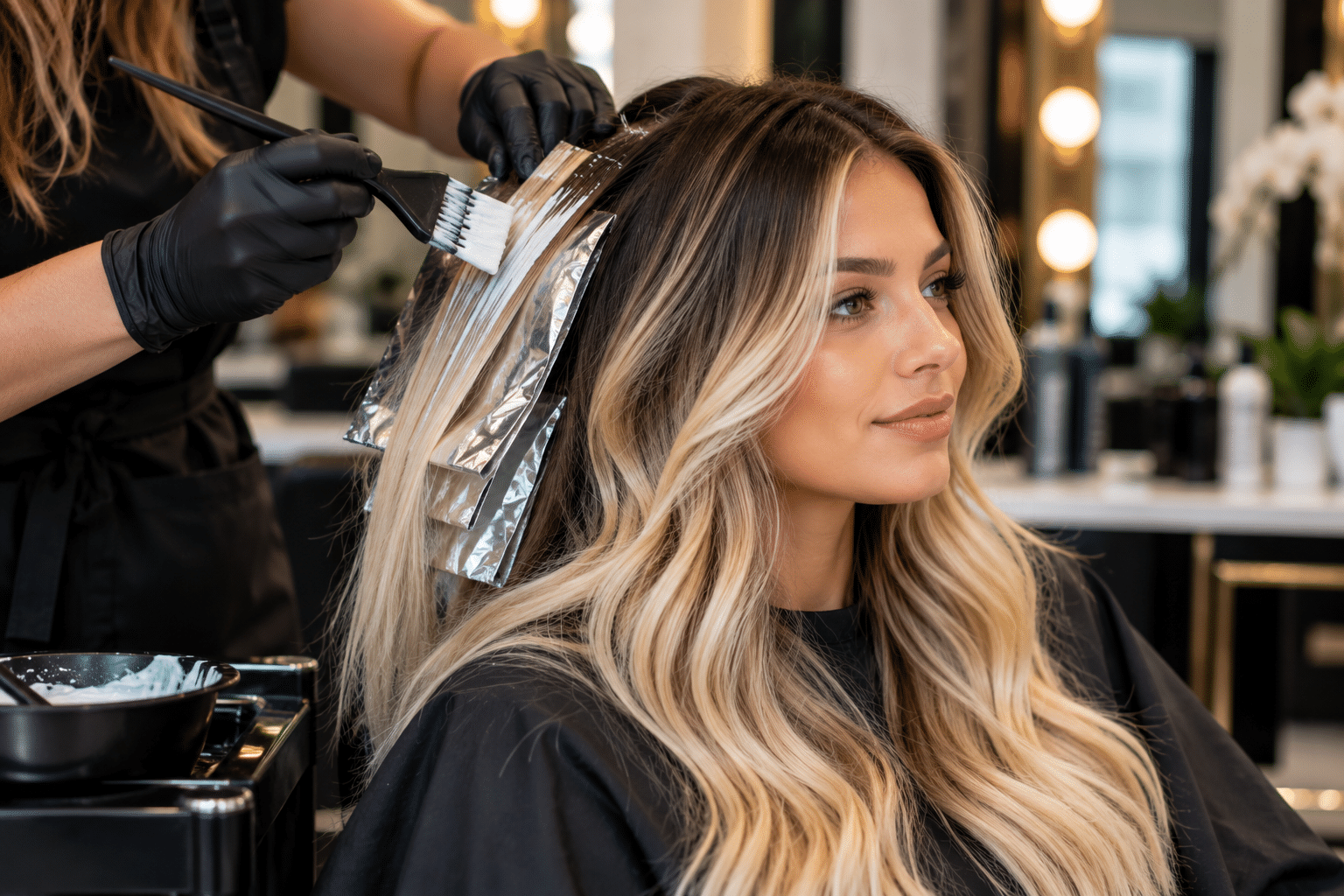
Dark to Blonde Hair Transformation: What to Expect Before Going Blonde
A dark to blonde hair transformation can completely change your look, but achieving beautiful blonde hair involves much more than simply applying a lighter color. Your starting shade, previous color history, hair condition, desired blonde tone, and maintenance expectations can all influence the process.
Whether you want a soft honey blonde, dimensional highlights, buttery blonde, or a much lighter platinum result, working with an experienced colorist can help determine the appropriate approach for your hair.
Most importantly, going blonde doesn’t always happen in one appointment. Understanding the process beforehand can help you set realistic expectations while protecting the condition of your hair.

What Happens During a Dark to Blonde Hair Transformation?
Changing dark hair to blonde usually involves removing or lifting some of the existing pigment before creating the desired blonde tone. However, the exact process depends heavily on your starting hair.
Natural brunette hair, previously colored brunette hair, black box dye, highlights, and previously lightened hair can all respond differently during the lightening process.
Therefore, your stylist should evaluate your hair before deciding how quickly and how dramatically it can safely be lightened.
Your Starting Color Affects Your Blonde Transformation
The darker your starting hair, the more pigment may need to be lifted to achieve a significantly lighter blonde.
Additionally, hair often reveals underlying warm pigments as it lightens. Depending on your starting color, these can include red, orange, yellow, or golden tones.
Your stylist can then use professional color and toning techniques to help create the desired finished shade.
Previous Hair Color Matters
Always tell your stylist about your color history before beginning a dark to blonde hair transformation.
Previous permanent color, box dye, highlights, bleach, color correction, keratin treatments, and other chemical services can affect how your hair responds.
Even if your previous color was applied months ago, some artificial pigment may still remain in the lengths of your hair.
Can You Go From Dark Hair to Blonde in One Appointment?
Sometimes a noticeable blonde transformation can happen during one appointment. However, reaching a dramatically lighter shade may require multiple sessions depending on the starting color and condition of the hair.
Trying to achieve the lightest possible result too quickly isn’t always the best approach. Maintaining the condition and strength of the hair should remain part of the color plan.
For a personalized evaluation, Bell Arte offers professional hair color and highlighting services that can be customized according to your starting hair and desired result.
Why a Dark to Blonde Transformation May Take Multiple Sessions
Hair that has been repeatedly colored dark may behave differently from naturally dark, untreated hair. Artificial pigment can make the lightening process more complex and sometimes less predictable.
In these situations, your stylist may recommend gradually moving lighter rather than attempting the complete transformation during one appointment.
This approach can also give the stylist more control over the developing color and condition of the hair.
Choosing the Right Blonde Shade for Your Transformation
Blonde isn’t a single color. There are numerous shades ranging from warm golden blondes to cool platinum tones.
Your stylist can help customize a shade according to your starting color, complexion, existing hair, maintenance preferences, and overall style.
Honey Blonde
Honey blonde contains warm golden tones and can create a softer transition for clients moving from darker hair. It can also be combined with darker pieces to create additional dimension.
Buttery Blonde
Buttery blonde combines warm, creamy tones for a soft and luminous appearance. Rather than appearing extremely cool or icy, it maintains noticeable warmth.
Beige Blonde
Beige blonde typically balances warmer and cooler tones to create a more neutral result. It can be a useful option for clients who don’t want their blonde to appear extremely golden or extremely ashy.
Icy or Platinum Blonde
Very light blonde shades generally require considerably more lightening than darker blonde tones. Consequently, your starting color and hair condition become particularly important when considering platinum or icy blonde.
Dark to Blonde Hair Transformation With Highlights
You don’t necessarily need to color every strand blonde to create a dramatic transformation.
Highlights can introduce lighter pieces throughout darker hair while maintaining some of the original depth. Depending on placement and intensity, the finished result can range from subtle dimension to an overall much brighter blonde appearance.
Highlights can also be customized around the face to create additional brightness where it is most noticeable.
Dark to Blonde Hair Transformation With Balayage
Balayage provides another way to introduce blonde into darker hair. Rather than creating uniform lightness from roots to ends, the technique can preserve depth near the root while gradually introducing lighter sections.
This can create a dimensional, blended appearance and may be appealing to clients who don’t want an all-over blonde result.
Bell Arte’s balayage hair coloring service provides additional information about this approach and how customized placement can create dimension.
How to Protect Hair During a Dark to Blonde Hair Transformation
Lightening hair involves chemical processing, so protecting the condition of your hair should be considered throughout the transformation.
The American Academy of Dermatology offers hair-coloring and chemical-treatment guidance designed to help reduce unnecessary hair damage.
A professional colorist can evaluate your hair before processing and determine an appropriate approach based on its current condition.
Don’t Hide Your Previous Color History
Your stylist needs accurate information about previous chemical services. If you’ve used permanent color, box dye, bleach, relaxers, smoothing treatments, or other chemical products, mention them during your consultation.
Avoid Forcing the Hair Too Light Too Quickly
Your desired blonde may require more than one appointment. If your stylist recommends a gradual transformation, the recommendation may be based on how your hair is responding during the lightening process.
Pay Attention to Hair Condition
Hair texture, elasticity, dryness, and previous chemical processing can influence how aggressively the hair should be lightened.
Blonde Hair Maintenance After Coloring

Once you’ve achieved your desired shade, blonde hair maintenance after coloring becomes an important part of preserving both the appearance and condition of your hair.
Your maintenance routine will depend on your blonde shade, coloring technique, natural hair color, hair condition, and how quickly your hair grows.
Use Products Designed for Color-Treated Hair
Ask your stylist which shampoo, conditioner, and treatments are appropriate for your specific blonde and hair type.
Color-treated hair may have different moisture and conditioning needs than untreated hair, particularly after significant lightening.
Use Purple Shampoo When Appropriate
Purple shampoo is commonly used to help neutralize unwanted yellow tones in certain blonde shades.
However, not every blonde requires the same products or frequency of use. Ask your stylist whether purple shampoo is appropriate for your particular blonde tone.
Protect Blonde Hair From Excessive Heat
Frequent high-temperature styling can contribute to dryness and damage. When using blow dryers, curling irons, or flat irons, use appropriate heat protection and avoid unnecessary heat exposure.
Keep Blonde Hair Conditioned
Maintaining adequate moisture can become particularly important after lightening. Your stylist may recommend conditioners, masks, or other treatments according to the condition and texture of your hair.
How Often Does Blonde Hair Need Maintenance?
There isn’t one maintenance schedule that works for every blonde client.
An all-over blonde transformation may require a different schedule than balayage or dimensional highlights. Additionally, the contrast between your natural color and blonde shade can influence how noticeable new growth becomes.
Instead of automatically scheduling the same interval for everyone, ask your stylist how frequently your particular color should be refreshed.
Blonde Hair Maintenance After Coloring: Preventing Unwanted Brassiness
Blonde hair can sometimes develop warmer yellow or orange tones between appointments. How noticeable this becomes depends on your shade, hair, products, water exposure, and other factors.
Your stylist may recommend professional toning or specific home-care products to maintain your preferred blonde tone.
However, don’t attempt aggressive chemical corrections at home simply because the color has shifted. If your blonde changes significantly, ask your colorist what is causing the change and how it should be corrected.
Popular Blonde Looks for a Hair Transformation

by Jay Soundo (https://unsplash.com/@jaysoundo)
Rather than choosing a blonde simply because it’s currently popular, consider which shade and coloring technique fits your hair, desired maintenance level, and personal style.
Dimensional Blonde
Dimensional blonde combines lighter and darker pieces rather than using one uniform shade. Maintaining some depth can create contrast and movement throughout the hair.
Soft Warm Blonde
Warm blonde shades can include honey, golden, beige, and buttery tones. These shades can be customized to create anything from subtle warmth to a noticeably golden result.
Cool Blonde
Cooler blonde shades minimize warm tones and can range from soft ash blonde to considerably lighter icy shades.
Blonde With a Shadow Root
Maintaining additional depth near the roots can create a softer transition into lighter lengths and ends. This can also change how the color appears as the natural hair grows.
What to Discuss During Your Blonde Hair Consultation
A consultation gives your stylist an opportunity to evaluate your hair and gives you an opportunity to explain exactly what you want.
Consider discussing:
- Your natural hair color
- Previous permanent color or box dye
- Previous bleach or highlights
- Your desired blonde shade
- How light you eventually want to go
- Your preferred level of maintenance
- Your normal styling routine
- The current condition of your hair
Bring several inspiration photographs whenever possible. Terms such as honey blonde, beige blonde, ash blonde, and platinum can mean slightly different things to different people, so photographs provide a much clearer visual reference.
Is Professional Blonde Coloring Better Than DIY Lightening?
Moving from dark hair to blonde can involve significant lightening, particularly when the starting hair contains artificial dark pigment.
A professional colorist can evaluate the starting hair, monitor the lightening process, formulate toners, adjust the approach, and determine whether the desired result should be completed gradually.
The U.S. Food and Drug Administration provides consumer information about hair dyes and coloring products, including safety precautions for their use.
Frequently Asked Questions About Dark to Blonde Hair Transformations
How Long Does a Dark to Blonde Hair Transformation Take?
The time required depends on your starting color, previous color history, desired shade, hair length, density, and condition. Some transformations can produce significant results during one appointment, while others may require multiple sessions.
Can Dark Brunette Hair Become Blonde?
Yes, dark brunette hair can be lightened. However, naturally dark hair and hair containing previous artificial dark color may require different processes. Your stylist should evaluate the hair before determining an appropriate plan.
Can Black Dyed Hair Become Blonde?
Previously dyed black hair can be more complex to lighten because artificial pigment may remain within the hair. A consultation is important before attempting a dramatic change.
Will Going Blonde Damage My Hair?
Lightening is a chemical process that can affect hair condition. The amount of processing required, starting condition, previous chemical services, and home care all influence the result. Your stylist can evaluate these factors before recommending an approach.
What Is the Easiest Blonde Shade to Maintain?
Maintenance depends partly on the difference between your natural hair and the finished blonde. Techniques that preserve some natural depth may produce less obvious grow-out than an all-over blonde transformation, although individual results vary.
How Do I Maintain Blonde Hair After Coloring?
Blonde hair maintenance after coloring may include appropriate shampoo and conditioner, heat protection, conditioning treatments, professional toning when necessary, and scheduled color appointments based on your particular blonde.
Planning Your Dark to Blonde Hair Transformation
A successful dark to blonde hair transformation begins with realistic expectations and a personalized color plan. Instead of focusing only on how light you can become during one appointment, consider your desired shade, hair condition, maintenance commitment, and long-term color goals.
Whether you’re considering subtle blonde dimension or a dramatic transition from brunette to blonde, a professional consultation can help determine the appropriate path.
Afterward, consistent blonde hair maintenance after coloring can help preserve your tone, shine, and overall appearance while you enjoy your new blonde look.