
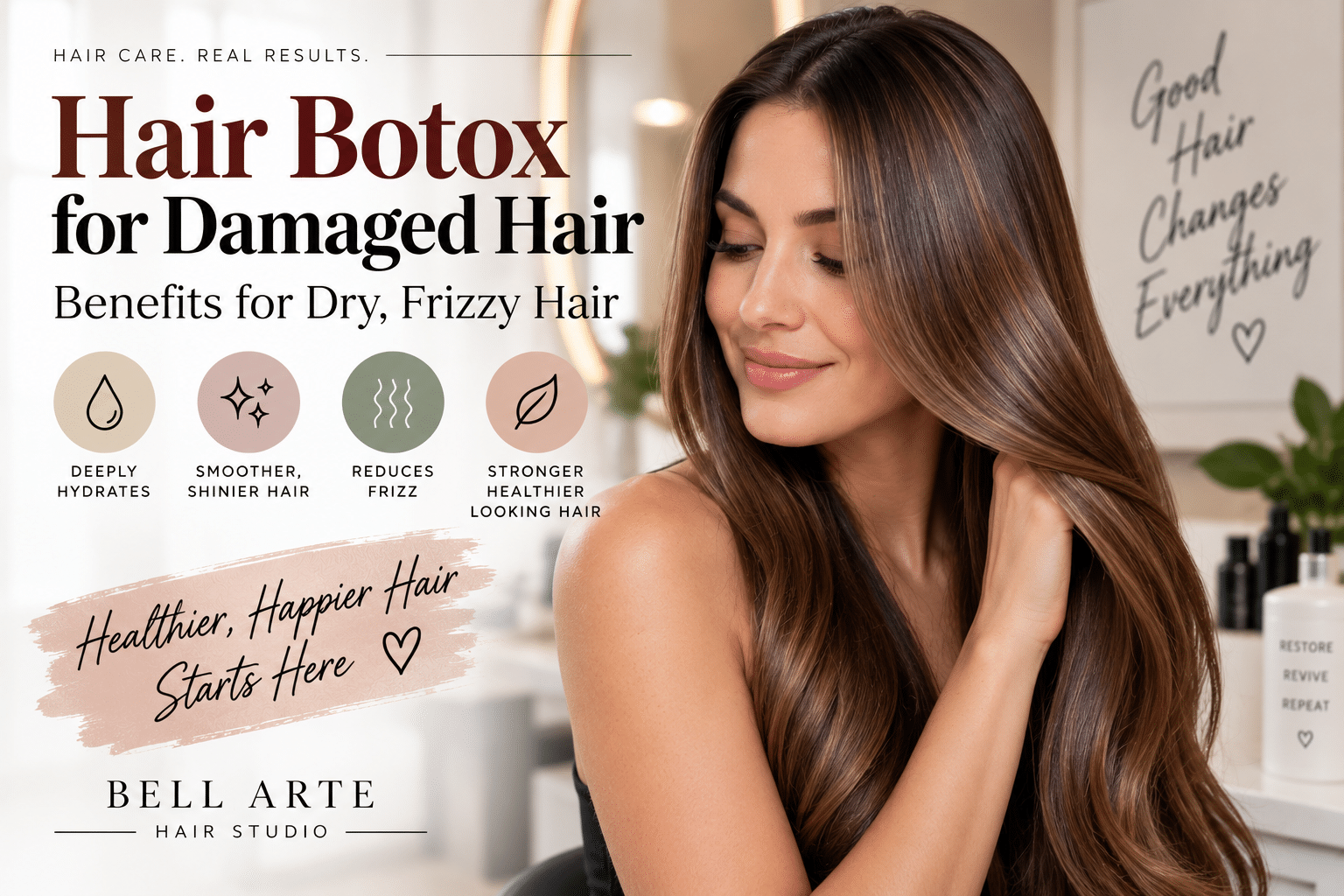
Hair Botox for Damaged Hair: Benefits for Dry, Frizzy Hair
Hair botox for damaged hair is a deep-conditioning salon treatment that can improve the appearance and feel of dry, porous, brittle, and over-processed hair. Rather than using injections or actual Botox, the treatment delivers conditioning ingredients directly to the hair to improve softness, shine, smoothness, and manageability.
If heat styling, coloring, bleaching, humidity, or everyday wear has left your hair rough and difficult to manage, hair botox for dry frizzy hair can provide intensive conditioning without permanently changing your natural hair texture.
Unlike cosmetic Botox injections, hair Botox does not use botulinum toxin. The name describes the treatment’s smoothing and fuller-looking effect on damaged hair rather than an injectable medical procedure.
At Bell Arte Hair Studio, we offer professional Hair Botox treatments in Tampa for clients who want smoother, softer, more manageable hair.
How Does the Treatment Work?
Professional formulas typically combine conditioning agents with ingredients such as proteins, amino acids, vitamins, oils, or other moisturizing compounds. The exact ingredients vary by manufacturer.
These conditioning ingredients coat and smooth rough areas along the hair shaft. As a result, damaged hair can look shinier, feel softer, appear fuller, and become easier to style.
Hair Botox does not literally rebuild a damaged strand into new hair. Instead, intensive conditioning and smoothing improve the condition and appearance of existing hair.
Healthline describes hair Botox as a conditioning treatment that goes directly onto the hair rather than an injectable treatment. You can read its overview of hair Botox treatments for additional information.
Why Does Damaged Hair Become Dry and Frizzy?
Healthy-looking hair has a relatively smooth outer cuticle. Bleaching, coloring, excessive heat, environmental exposure, friction, and repeated chemical processing can make that surface rougher and more porous.
Porous hair often loses moisture more easily and reacts more dramatically to humidity. Instead of lying smoothly, strands may appear frizzy, dull, tangled, or uneven.
This explains why damaged hair can feel dry even after you use ordinary conditioner. A professional deep-conditioning treatment provides more intensive smoothing than a typical daily conditioner.
Top Benefits You May Notice
The primary benefits include hydration, smoothness, shine, frizz control, and improved manageability.
1. Smoother Texture
Hair Botox conditions rough and porous areas along the hair shaft. Smoothing the outer surface can make damaged strands feel softer and less coarse.
2. Less Visible Frizz
Hair botox for dry frizzy hair can help smooth the cuticle and improve moisture balance. This effect often makes hair easier to manage in humid conditions while reducing visible flyaways and frizz.
3. More Shine
A smoother hair surface reflects light more evenly. Properly conditioned hair can therefore appear noticeably shinier than dry, rough, or highly porous hair.
4. Better Manageability
Dry and damaged hair can tangle easily and require more effort to brush and style. Intensive conditioning can improve softness and simplify everyday styling.
5. A Fuller Appearance
Conditioning damaged areas of the strand can give hair a smoother and fuller appearance. However, the treatment does not create new hair follicles or directly cause new hair growth.
6. Easier Daily Styling
Smoother, more manageable hair may require less blow-drying and flat-ironing to achieve a polished appearance. Using less unnecessary heat can also help limit additional stress on already damaged hair.
Who Benefits Most From Deep Conditioning?
People with dry, frizzy, porous, or difficult-to-manage hair may benefit from intensive conditioning. This type of treatment primarily targets rough texture, lack of moisture, dullness, and frizz.
Clients whose hair feels coarse or dry after coloring, bleaching, frequent heat styling, or environmental exposure may also notice improvements in softness and manageability.
Results vary according to your starting hair condition and the professional formula your stylist uses. A consultation can determine whether intensive conditioning, another restorative treatment, or a different salon service better matches your hair.
Can Severely Damaged Strands Be Restored?
Hair botox for damaged hair can improve the appearance, feel, and manageability of compromised strands, but the word “repair” needs context.
Hair outside the scalp consists of nonliving keratinized fibers. Cosmetic treatments can condition, coat, and temporarily improve damaged strands, but they cannot biologically heal hair in the same way living skin heals a wound.
That distinction matters for severely over-processed hair. Hair Botox can make compromised hair look and feel better, but no cosmetic treatment can completely reverse severe structural damage.
If your hair stretches excessively when wet, breaks easily, or has suffered significant chemical damage, ask your stylist to assess its condition before adding another treatment.
Deep Conditioning vs. Keratin Smoothing
Hair Botox and professional keratin smoothing treatments can both reduce frizz and improve manageability, but they serve different primary purposes.
Hair Botox focuses primarily on deep conditioning, hydration, softness, and improving the appearance of damaged hair. It does not permanently restructure your natural curl pattern.
Keratin smoothing treatments generally focus more heavily on smoothing, controlling frizz, and changing how the hair behaves during styling. Specific ingredients and results vary significantly between brands.
- Choose Hair Botox when: Your main concerns include dryness, dullness, damage, frizz, rough texture, or loss of softness.
- Consider professional smoothing when: Your primary goal involves stronger frizz reduction and easier straight styling.
- Ask your stylist when: Your hair has undergone bleaching, repeated coloring, chemical processing, or significant heat damage.
If you are comparing smoothing options, you can also learn about Global Keratin treatments at Bell Arte Hair Studio.
What’s Actually in the Treatment?
Hair Botox does not contain the botulinum toxin used in cosmetic Botox injections.
Cosmetic Botox uses botulinum toxin to temporarily affect targeted muscles. Hair Botox takes a completely different approach by using topical conditioning ingredients on the hair shaft without injections.
The name “hair Botox” serves as a cosmetic comparison. Just as cosmetic Botox can create a smoother appearance in skin, this salon treatment aims to give damaged hair a smoother and fuller-looking finish.
For comparison, Cleveland Clinic explains how actual botulinum toxin injections work. Hair Botox is an entirely different type of treatment.
What to Expect at Your Salon Appointment
A professional appointment generally involves cleansing, applying the treatment, allowing it to process, and finishing the hair according to the manufacturer’s instructions.
The exact procedure can vary by product, but a typical salon treatment follows these steps:
- Consultation: Your stylist evaluates your hair texture, porosity, chemical history, damage, and desired results.
- Clarifying shampoo: A thorough cleanse removes oils, styling products, and buildup.
- Application: Next, the stylist distributes the treatment evenly through sections of the hair.
- Processing: The formula remains on the hair for the amount of time specified by the manufacturer.
- Rinsing: After processing, the stylist rinses the treatment according to the specific product instructions.
- Drying and finishing: Finally, the stylist blow-dries and styles the hair. Some formulas also use controlled heat during the finishing process.
Manufacturers formulate Hair Botox products differently, so processing times and finishing instructions can vary. Your stylist should follow the directions for the exact professional product used on your hair.
How Long Do the Results Last?
Results commonly last several weeks to a few months, although longevity varies considerably from person to person.
Your hair type, condition, washing frequency, shampoo, heat styling, swimming habits, and the specific treatment formula can all affect how quickly the smoothing and conditioning effects fade.
Bell Arte generally advises clients that results can last approximately two to four months with proper care, although individual results vary.
How to Maintain Your Results
Good aftercare can help preserve your smoother texture, softness, and shine.
- Follow your stylist’s washing instructions: Different professional formulas may require different aftercare.
- Use gentle hair-care products: Choose shampoos and conditioners compatible with your treatment.
- Avoid unnecessary washing: Frequent washing may shorten the life of some conditioning treatments.
- Limit excessive heat: Use only as much heat as necessary when styling.
- Condition regularly: Maintain moisture with products appropriate for your hair type.
- Protect your hair while swimming: Chlorinated and salt water can leave processed hair feeling dry.
Is This Treatment Right for You?
This service may suit you if you want intensive conditioning and improved manageability without permanently straightening your hair.
Consider discussing the treatment with your stylist if your hair is:
- Dry or dehydrated
- Frizzy or difficult to manage
- Dull or lacking shine
- Color-treated
- Bleached or highlighted
- Frequently heat-styled
- Porous or rough
- Prone to tangling
A professional consultation becomes particularly important when your hair has significant chemical damage or breakage. Your stylist can examine its condition and recommend the most appropriate approach.
Frequently Asked Questions
Can it help damaged hair?
Yes. Intensive conditioning can improve the softness, smoothness, shine, and manageability of damaged hair. It cannot biologically regenerate severely damaged strands, but it can significantly improve their appearance and feel.
Is it suitable for dry and frizzy hair?
Yes. The treatment primarily targets dryness, roughness, porosity, and frizz, making it a popular option for dry and difficult-to-manage hair.
Will it straighten my hair?
The treatment can make hair look smoother and more relaxed, but it does not permanently straighten hair or permanently change its natural texture.
Does it contain botulinum toxin?
No. Hair Botox does not contain the botulinum toxin used in injectable Botox. It is a topical conditioning treatment for hair.
Can I get it on color-treated hair?
Many people use Hair Botox on color-treated hair. However, your stylist should evaluate your hair first, particularly if you recently bleached or heavily processed it.
How long can I expect the effects to last?
Results vary, but they commonly last several weeks to a few months. Hair type, washing frequency, aftercare, and the specific formula all influence longevity.
Will it make my hair grow?
No evidence shows that topical Hair Botox directly stimulates new hair growth. However, better conditioning and less breakage can help existing hair maintain a healthier appearance.
How often should I repeat the treatment?
The appropriate schedule depends on the product, your hair condition, and how long your previous results lasted. Ask your stylist to recommend a schedule instead of automatically repeating the service at a fixed interval.
Professional Care for Damaged and Frizzy Hair in Tampa
If your hair feels dry, rough, frizzy, dull, or difficult to style, a professional consultation can help determine what your hair actually needs.
Bell Arte Hair Studio provides professional Hair Botox services for clients throughout the Tampa area. Our approach considers your hair texture, condition, previous chemical services, and desired result before selecting a treatment.
Whether you want to restore softness after coloring, improve the appearance of damaged ends, reduce humidity-related frizz, or simply make your hair easier to manage, the right professional treatment and aftercare routine can help you achieve smoother, shinier, healthier-looking hair.