
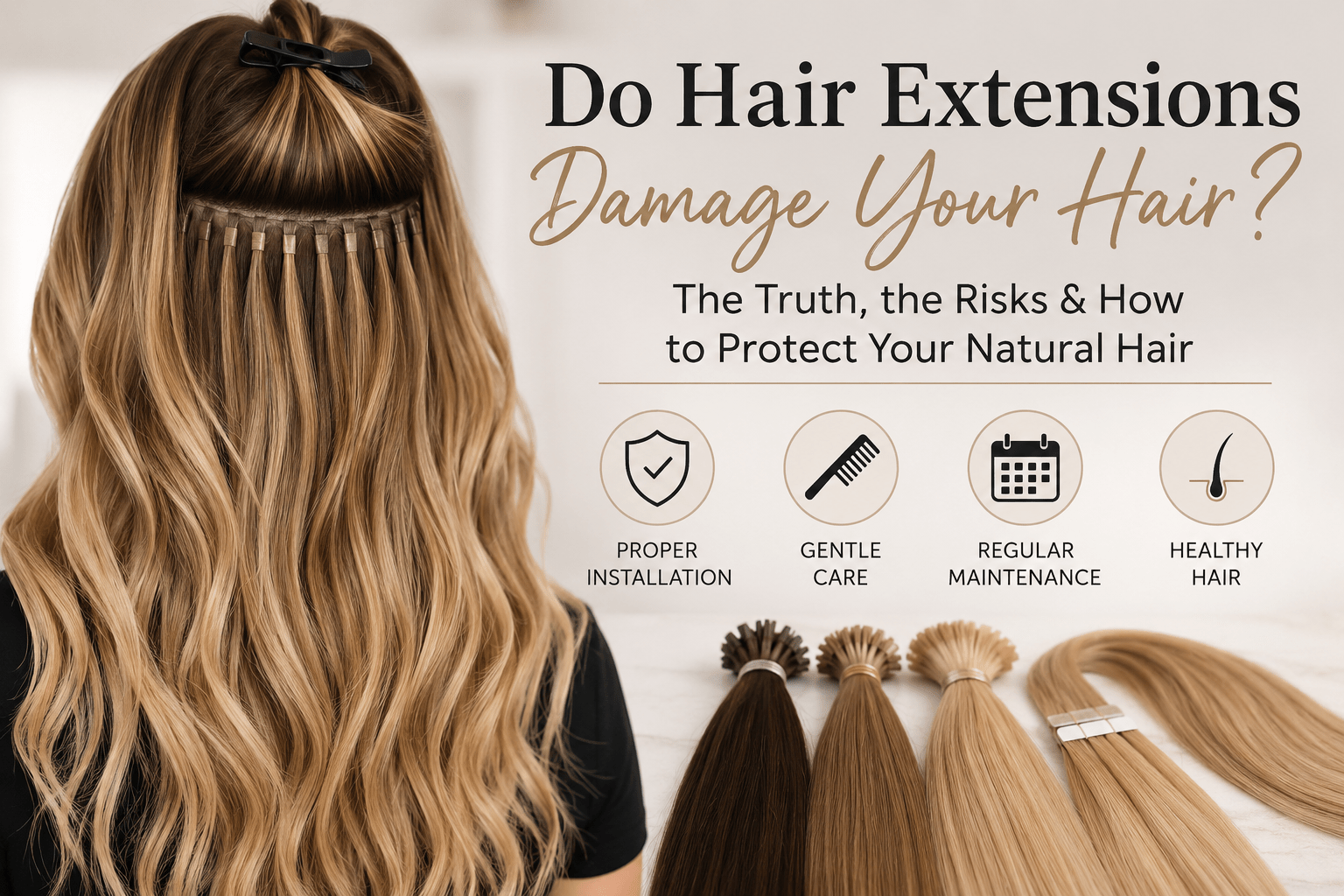
Hair Extensions Exposed: Do Hair Extensions Damage Your Hair?
Do hair extensions damage your hair? Not necessarily. Professionally selected, installed, and maintained hair extensions can be worn without automatically damaging your natural hair. Hair extension damage is more likely when extensions create excessive tension, are too heavy for the natural hair, are installed or removed incorrectly, or aren’t properly maintained.
The key isn’t simply whether you wear extensions. It’s choosing an extension method appropriate for your natural hair, using the correct amount of hair and tension, following proper home care, and maintaining your extensions on the schedule recommended by your stylist.
At Bell Arte Hair Studio in Tampa, Florida, protecting the client’s natural hair is an important part of the extension process—not an afterthought.
Do Hair Extensions Damage Your Hair?
The short answer is that hair extensions can damage your natural hair, but hair extension damage is not inevitable.
Problems are generally associated with excessive or prolonged tension, extensions that are too heavy for the natural hair, improper placement, poor maintenance, incorrect removal, excessive heat, or continuing to wear extensions when the scalp or natural hair is showing signs of stress.
The American Academy of Dermatology (AAD) warns that hairstyles that repeatedly pull on the hair—including certain extensions and weaves—can contribute to breakage and a form of hair loss known as traction alopecia.
Learn more about traction alopecia from the American Academy of Dermatology.
That doesn’t mean everyone who wears extensions will experience hair extension damage. It means that tension, weight, installation technique, maintenance, and the condition of your natural hair all matter.
What Causes Hair Extension Damage?
Hair extension damage is most often associated with excessive tension, excessive weight, poor placement, improper maintenance, or incorrect removal.
When someone experiences breakage or thinning while wearing extensions, the extensions themselves aren’t always the only factor. How they were selected, installed, maintained, styled, and removed can all play a role.
1. Too Much Tension
One of the biggest warning signs is an extension installation that feels excessively tight or painful.
Repeated pulling places stress on the hair and follicles. Ignoring persistent pulling or discomfort can increase the risk of hair extension damage, particularly around fragile areas such as the hairline and temples.
2. Extensions That Are Too Heavy
More extension hair isn’t always better. The weight of the extensions should be appropriate for the density and strength of your natural hair.
Fine or thin hair may require a very different extension plan than thick, dense hair. Placing too much extension weight on insufficient natural hair can create unnecessary stress on individual strands.
3. Improper Extension Placement
Extensions need enough natural hair to support them. Poor placement can concentrate weight and tension on hair that isn’t strong enough to carry it.
Professional sectioning and placement help distribute extension weight more appropriately across the natural hair.
4. Incorrect Removal
Trying to remove professional extensions yourself can lead to unnecessary pulling, tangling, and breakage.
Professional removal is important because the attachment method needs to be properly released rather than pulled away from the natural hair. Improper removal is one of the avoidable causes of hair extension damage.
5. Waiting Too Long Between Maintenance Appointments
Your natural hair continues to grow while you’re wearing extensions. As the attachment moves farther from the scalp, tangling, matting, and uneven stress can become more likely.
The appropriate maintenance schedule depends on the extension method, your natural hair, and how quickly your hair grows.
6. Excessive Heat and Chemical Processing
Extensions aren’t the only possible source of damage. Frequent flat ironing, curling, bleaching, coloring, and other chemical treatments can also weaken natural hair.
Do Hair Extensions Damage Your Hair Permanently?
Hair extensions do not automatically cause permanent hair damage. However, repeatedly placing excessive tension on the hair can potentially damage the follicles and contribute to traction alopecia.
Early breakage and tension-related problems may improve when the source of stress is identified and removed. More advanced follicle damage can be much more serious.
This is why pain, unusual thinning, and noticeable changes around the hairline shouldn’t be ignored.
What Is Traction Alopecia?
Traction alopecia is hair loss caused by repeated or prolonged pulling on the hair.
It isn’t limited to hair extensions. Tight ponytails, buns, braids, cornrows, weaves, and other styles that repeatedly place tension on the hair can also contribute to the condition.
According to the American Academy of Dermatology, ongoing pulling can eventually damage hair follicles. Advanced traction alopecia can become permanent, which is why early warning signs shouldn’t be ignored.
Read the AAD’s recommendations for preventing hair damage from extensions and weaves.
What Are the Signs of Hair Extension Damage?
Early signs of hair extension damage can include persistent pain, excessive pulling, breakage, scalp irritation, and thinning around extension attachment points.
Possible warning signs include:
- Persistent pain or tenderness after installation
- A feeling that the extensions are pulling excessively
- Increasing breakage around attachment points
- Thinning around the hairline or temples
- Redness, irritation, or bumps on the scalp
- Excessive tangling or matting near the roots
- Noticeable changes in natural hair density
If you’re experiencing significant thinning, bald patches, persistent scalp pain, or unexplained hair loss, speak with a board-certified dermatologist rather than trying to diagnose the cause yourself.
Are Hair Extensions Safe for Thin or Fine Hair?
Some people with fine or thin hair can wear hair extensions, but preventing hair extension damage requires careful attention to extension method, weight, placement, and the amount of natural hair available for support.
Fine hair shouldn’t automatically receive the same extension application as thick, dense hair.
A professional hair extension consultation should evaluate factors such as:
- Natural hair density
- Individual strand strength
- Existing breakage or thinning
- Scalp condition
- Hairline density
- Previous chemical treatments
- Previous hair extension damage
- Desired length and volume
- Lifestyle and styling habits
The goal should be to create the desired result without placing unnecessary weight or tension on fragile areas.
Which Hair Extensions Are Least Damaging?
There is no single hair extension method that is automatically the least damaging for every person.
The safest choice depends on your natural hair density, condition, texture, lifestyle, desired result, and how the extensions will be installed and maintained.
Common professional extension methods include:
- K-tip or keratin bond extensions
- I-tip extensions
- Tape-in extensions
- Weft extensions
- Other professionally installed extension systems
A method that works beautifully for one client may not be the best choice for someone with significantly finer, weaker, or more fragile hair. That’s one reason a professional consultation is so important when your goal is to minimize the risk of hair extension damage.
Can K-Tip Hair Extensions Damage Your Hair?
K-tip extensions can cause hair extension damage if they are too heavy, incorrectly placed, improperly maintained, or removed incorrectly, but the method itself does not mean damage will automatically occur.
K-tip extensions use individual keratin bonds, allowing a stylist to customize placement and the amount of extension hair used throughout the head. Proper sectioning, bond sizing, placement, and maintenance are particularly important.
Can Tape-In Hair Extensions Damage Your Hair?
Tape-in extensions can cause breakage when they are improperly installed, maintained, or removed.
Because tape-ins attach extension hair to sections of natural hair, proper placement and weight distribution are important. Professional removal is also essential because pulling or peeling the extensions out incorrectly can stress the natural hair and potentially contribute to hair extension damage.
Do Weft Hair Extensions Damage Natural Hair?
Weft extensions are not automatically damaging, but excessive weight or tension can stress the natural hair and scalp.
As with other extension methods, the stylist needs to consider the client’s natural hair density, placement, extension weight, and maintenance requirements.
How Professional Installation Helps Prevent Hair Extension Damage
Professional installation can help reduce the risk of hair extension damage by matching the extension method, weight, and placement to the client’s natural hair.
An experienced extension specialist should evaluate your natural hair before recommending an application method.
Important considerations include:
- Selecting an extension method appropriate for your natural hair
- Using an appropriate amount and weight of extension hair
- Creating proper sections
- Avoiding excessive tension
- Protecting fragile areas and the hairline
- Blending extensions without unnecessarily stressing natural hair
- Providing proper home-care instructions
- Scheduling appropriate maintenance
- Professionally removing the extensions when necessary
How to Prevent Hair Extension Damage
If you’re wondering do hair extensions damage your hair, one of the most important things to understand is that proper care can make a major difference.
Choose an Experienced Hair Extension Specialist
Professional assessment and installation are especially important because extension placement should be customized to your natural hair.
Never Ignore Pain or Excessive Tightness
Hair extensions shouldn’t create persistent pain. Excessive tightness is a warning sign that unnecessary tension may be placed on your hair and scalp.
Brush Extensions Correctly
Use the brushing technique and tools recommended for your extension method. Support the attachment area while gently detangling instead of aggressively pulling through knots.
Keep Your Hair and Scalp Clean
Follow the washing instructions recommended for your extension method and avoid allowing excessive product buildup around attachment areas.
Be Careful With Heat
Limit unnecessary high heat and follow your stylist’s recommendations for styling around extension attachment points.
Don’t Skip Extension Maintenance
Professional maintenance allows your stylist to evaluate your natural hair, attachments, and new growth before small issues become larger problems.
Have Extensions Professionally Removed
Don’t pull, cut, or force professional extensions out yourself. Proper removal can help protect natural hair from unnecessary breakage.
Can Hair Grow Normally While Wearing Extensions?
Yes. Your natural hair continues through its normal growth cycle while you’re wearing hair extensions.
As your hair grows, extension attachment points gradually move farther away from the scalp. This is one reason maintenance appointments are necessary.
Normal daily shedding also continues. Some naturally shed hairs may remain held within an extension attachment until the extension is removed, which can make normal shedding appear more noticeable during a maintenance or removal appointment.
Can Hair Recover From Hair Extension Damage?
Whether your hair can recover from hair extension damage depends on the type and severity of the damage.
Hair shaft breakage and certain forms of early traction-related hair loss may improve after the source of tension is removed, but advanced traction alopecia can cause permanent hair loss.
If you notice ongoing thinning, bald areas, or significant scalp symptoms, consult a board-certified dermatologist promptly.
Visit the American Academy of Dermatology Hair Loss Resource Center.
Hair Extension Damage: Myth vs. Fact
Myth: Hair extensions always ruin your natural hair.
Fact: Hair extension damage isn’t inevitable. Risk depends heavily on tension, extension weight, installation, maintenance, styling habits, and removal.
Myth: More extension hair gives you a better result.
Fact: Adding too much weight can unnecessarily stress natural hair. The amount of extension hair should be appropriate for the client’s natural density.
Myth: If extensions hurt, that’s normal.
Fact: Excessive or persistent pain should not be ignored. Pain or excessive tightness can be a warning sign that too much tension is being placed on the hair.
Myth: Everyone should use the same extension method.
Fact: Different hair densities, textures, conditions, and goals may require different extension methods and application strategies.
Myth: You can safely remove professional extensions yourself.
Fact: Incorrect removal can contribute to tangling, pulling, and breakage. Professional removal is the safer approach.
Hair Extensions in Tampa: Why the Consultation Matters
If you’re considering hair extensions in Tampa but are concerned about hair extension damage, your consultation is one of the most important parts of the process.
At Bell Arte Hair Studio, the goal isn’t simply to make your hair longer. Your extension plan should consider your existing hair, desired volume and length, lifestyle, maintenance expectations, and the condition of your natural hair.
This is especially important for clients with fine hair, thin hair, previous extension damage, or concerns about breakage.
A personalized consultation allows an extension specialist to evaluate whether extensions are appropriate and which approach may best fit your natural hair and goals.
Frequently Asked Questions About Hair Extension Damage
Do hair extensions damage your hair?
Hair extensions do not automatically damage your hair. However, excessive tension, excessive weight, improper installation, poor maintenance, and incorrect removal can contribute to breakage, thinning, and other forms of hair extension damage.
Do hair extensions ruin your natural hair?
No. Hair extensions do not automatically ruin natural hair. Problems are more likely when extensions place excessive stress on the natural hair or aren’t properly installed, maintained, and removed.
Are hair extensions bad for thin hair?
Not necessarily. Some people with thin or fine hair can wear extensions successfully, but extension weight, attachment size, placement, and the condition of the natural hair need to be carefully evaluated.
What type of hair extensions cause the least damage?
There isn’t one extension method that is universally safest. The best option depends on your natural hair, density, condition, lifestyle, and how the extensions are installed and maintained.
Should hair extensions hurt after installation?
Persistent or significant pain should not be considered normal. Extensions that feel excessively tight may be placing too much tension on your natural hair or scalp.
Can extensions cause traction alopecia?
Yes. Extensions that repeatedly create excessive tension can contribute to traction alopecia. Tight braids, ponytails, buns, weaves, and other tension-producing hairstyles can also cause it.
Can hair grow while wearing extensions?
Yes. Natural hair continues its normal growth cycle while extensions are being worn, which is why extension attachment points move away from the scalp over time.
How can I tell if extensions are damaging my hair?
Warning signs of possible hair extension damage can include persistent pain, excessive pulling, unusual breakage, thinning around attachment areas or the hairline, scalp irritation, and noticeable changes in hair density.
Can damaged hair recover after extensions are removed?
Some types of breakage or early tension-related hair loss may improve once the source of stress is removed. Advanced traction alopecia, however, can become permanent. A dermatologist should evaluate significant or persistent hair loss.
The Bottom Line: Do Hair Extensions Damage Your Hair?
So, do hair extensions damage your hair? They can—but hair extension damage is not inevitable.
Hair extensions are more likely to cause problems when they create excessive tension or weight or when they are improperly installed, maintained, or removed. Choosing an extension method appropriate for your natural hair, working with an experienced extension specialist, following proper home care, and keeping up with recommended maintenance can help reduce these risks.
If your primary concern is whether your natural hair is strong enough for extensions, don’t guess. Start with a professional evaluation.
Looking for a Hair Extension Specialist in Tampa?
If you’re considering hair extensions in Tampa and you’re concerned about hair extension damage, schedule a consultation with Bell Arte Hair Studio in Tampa, Florida.
We’ll discuss your current hair, desired length and volume, previous extension experience, maintenance expectations, and extension options that may be appropriate for your natural hair.
Beautiful hair extensions should begin with a plan designed around your natural hair.
Schedule Your Hair Extension Consultation
Sources & Hair Health Resources
- American Academy of Dermatology — Hairstyles That Pull Can Lead to Hair Loss
- American Academy of Dermatology — How to Prevent Hair Damage From a Weave or Extensions
- American Academy of Dermatology — Hair Styling Without Damage
This article provides general educational information about hair extensions and hair care and is not medical advice. If you are experiencing significant or unexplained hair loss, scalp pain, inflammation, or bald patches, consult a qualified healthcare professional or board-certified dermatologist.