
“`html
Hair Extensions for Length and Volume: Complete Transformation Guide
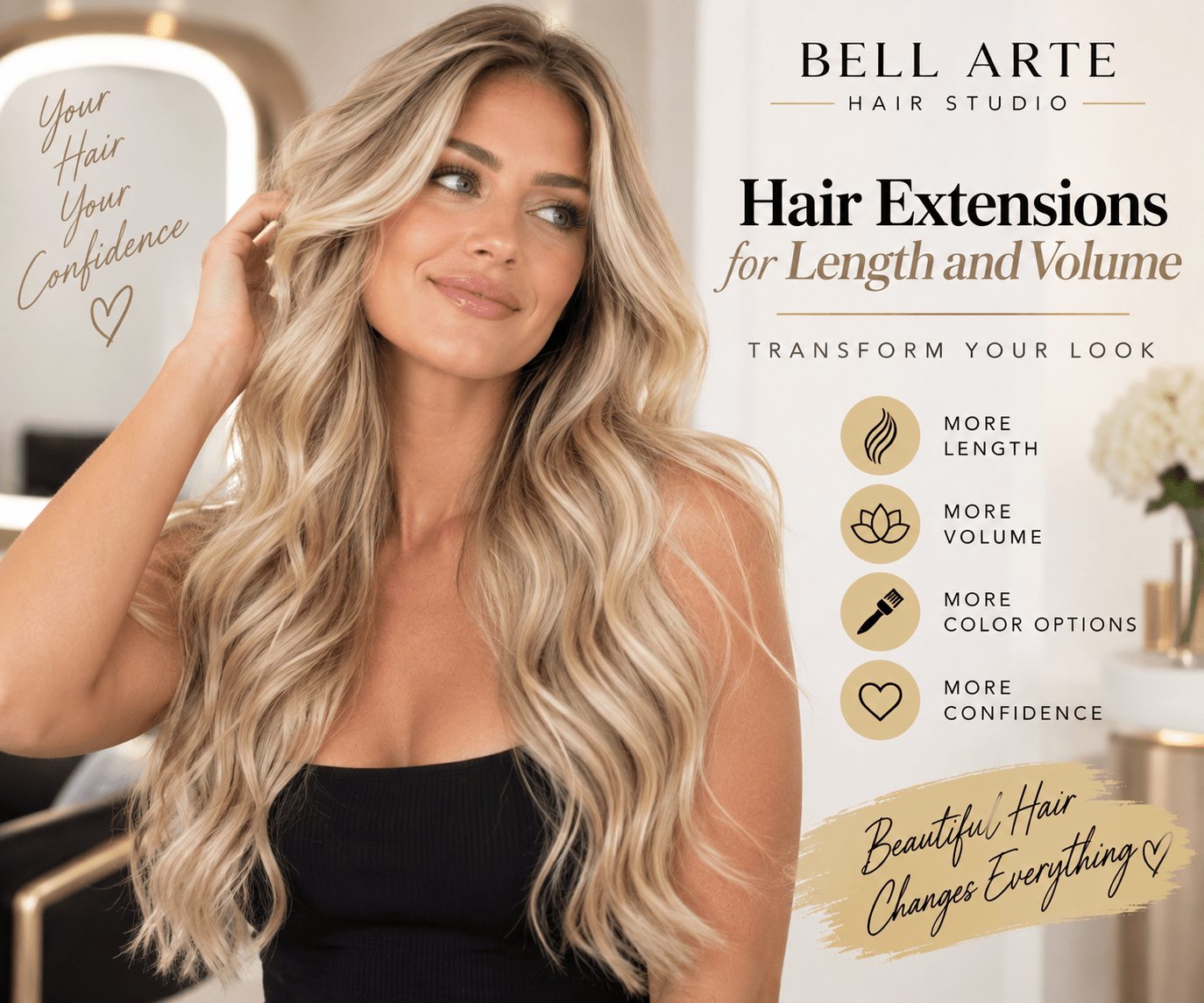
Hair Extensions for Length and Volume can create a dramatic change without waiting months or years for natural hair to grow. Professional extensions can add fullness, increase length, enhance styling possibilities, and create a customized look based on your natural hair. A professional Hair Extension Transformation begins with selecting the right hair, attachment method, weight, color, and placement for the individual client.
Modern extensions are not limited to dramatic, waist-length hairstyles. They can provide subtle fullness through the ends, increase density around the sides, add strategically placed color, or completely change the appearance of shorter hair.
What Are the Benefits of Hair Extensions for Length and Volume?
The primary benefits of Hair Extensions for Length and Volume are immediate added length, increased density, greater styling versatility, and the ability to customize your appearance without waiting for natural growth.
The results can range from extremely subtle to dramatically different. A professional extension specialist can adjust the amount of hair, length, color, and attachment method according to your natural hair and desired result.
Hair Extensions for Length and Volume Without Waiting for Hair Growth
Growing significantly longer hair naturally takes time. Genetics, breakage, chemical processing, hair condition, and individual growth cycles can also affect how long someone’s natural hair becomes.
Extensions provide an immediate cosmetic option. A client with shoulder-length hair, for example, may be able to create considerably longer-looking hair during a single professional installation.
The stylist must still blend the natural hair into the extensions carefully. Simply adding long hair does not automatically create a natural-looking result.
How Hair Extensions Add Volume to Fine-Looking Hair
Not every client wants dramatic length. Many people choose extensions primarily because they want their hair to appear fuller.
Strategically placed extensions can add density through the sides and ends, creating a fuller silhouette. Someone with naturally fine hair may prefer relatively little additional length while focusing primarily on volume.
Fine or delicate natural hair requires careful consideration because the attachment weight must be appropriate for the hair supporting it. More extension hair is not automatically better.
What Is a Hair Extension Transformation?
A Hair Extension Transformation is the process of using professionally selected and installed extension hair to change the appearance of length, density, color, texture, or overall hairstyle.
A transformation may be subtle, such as filling in thin-looking ends, or dramatic, such as changing shoulder-length hair into long, flowing waves.
The best transformations consider the client’s natural hair rather than simply copying a photograph. Density, texture, current length, condition, haircut, lifestyle, and maintenance preferences all influence the final result.
Hair Extension Transformation for Short Hair
Extensions can dramatically change the appearance of shorter hair, but short-to-long transformations require skilled blending.
The stylist must conceal the shorter natural layers within the longer extension hair. Color matching, placement, density, and a customized blending haircut can help create a smoother transition.
Extremely short hair may not provide enough length or density to conceal certain attachment methods. A professional consultation can determine what is realistically achievable.
Hair Extensions for Length and Volume Without Chemical Color
Extensions can also introduce additional shades without coloring every section of the natural hair.
For example, a stylist may combine extension shades to create the appearance of highlights, lowlights, dimensional color, or contrasting pieces. This can provide additional visual interest without applying lightener to those particular natural-hair sections.
Extensions do not eliminate all chemical-processing concerns because your natural hair may still require coloring or maintenance depending on the desired look.
More Styling Options With Hair Extensions
Additional length and density can provide more hair for styling. Extensions may make it possible to create fuller braids, ponytails, waves, curls, updos, and special-event hairstyles.
The amount of styling flexibility depends on the extension method and placement. Certain attachment areas may become visible when the hair is pulled into particular styles, which is why discussing your normal hairstyles during the consultation is important.
If you frequently wear high ponytails, buns, or updos, tell your stylist before installation so placement can account for those styling preferences.
Choosing the Right Hair for Your Hair Extension Transformation
Hair quality plays an important role in how extensions look, move, style, and maintain their appearance.
Human hair extensions generally provide greater styling versatility than conventional synthetic hair because many types can be washed and heat styled more similarly to natural hair. However, quality varies significantly among extension products.
What Is Remy Human Hair?
Remy hair refers to human hair processed so that the cuticles remain aligned in the same general direction. Maintaining cuticle alignment can help reduce unnecessary friction and tangling.
Hair quality still depends on additional factors, including sourcing, processing, coloring, manufacturing, maintenance, and the original quality of the hair.
Bell Arte provides additional information about Remy human hair extensions and professional extension options.
Choosing an Extension Method for Length and Volume
No single extension method works best for every client. Your natural density, texture, condition, desired result, lifestyle, and maintenance preferences should influence the decision.
A professional extension consultation can help determine which system provides the appropriate balance of length, volume, movement, maintenance, and comfort.
Tape-In Hair Extensions
Tape-in extensions use relatively flat attachment sections. They can provide length and volume while keeping the attachment profile low when properly placed.
The amount and placement should correspond to the density of the client’s natural hair.
Keratin Bond Extensions
Keratin extensions use individual attachment points, allowing a stylist to customize placement throughout the hair.
Because each extension attaches to an individual section of natural hair, correct section size and extension weight are important.
I-Tips and Micro Links
I-tip and micro link systems use individual attachment points. They offer another option for customized placement and movement.
Professional application and maintenance help ensure the natural-hair sections appropriately support each extension.
Weft Extensions
Wefts contain multiple strands of extension hair attached along a track. They can provide substantial volume and length when the client’s natural hair can appropriately support the installation.
Placement, track weight, and natural-hair density all influence the final result.
Professional Hair Extensions for Length and Volume
A professional installation involves much more than attaching additional hair. The stylist should evaluate the natural hair before recommending the extension system and amount of hair.
At Bell Arte Hair Studio, clients can learn more about professional hair extensions in Tampa, available extension methods, and customized extension services.
A consultation gives the stylist an opportunity to evaluate your hair and discuss realistic expectations before beginning the transformation.
Can Hair Extensions Damage Natural Hair?
Hair extensions can place stress on natural hair when they are too heavy, excessively tight, improperly maintained, incorrectly removed, or unsuitable for the client’s natural-hair condition.
Professional application can reduce unnecessary risk, but no responsible stylist should promise that every extension installation is completely risk-free.
The American Academy of Dermatology warns that repeated pulling from tight hairstyles, weaves, and extensions can contribute to traction alopecia. Pain or headaches can also indicate that an installation is too tight.
Read the American Academy of Dermatology guidance about protecting natural hair while wearing extensions for additional information.
How to Protect Natural Hair During a Hair Extension Transformation
Protecting natural hair starts before the extensions are installed. A professional should consider natural density, strand strength, scalp condition, previous chemical processing, breakage, and the desired amount of extension hair.
Appropriate weight distribution is especially important. A small or fragile section of natural hair should not support an extension attachment that is too heavy for it.
Maintenance matters as well. As natural hair grows, attachment points move farther from the scalp and may need professional repositioning, replacement, or removal.
Hair Extension Maintenance for Long-Lasting Results
Professional extensions require consistent home care. Maintenance instructions vary according to the extension method and manufacturer, so always follow the recommendations provided by your stylist.
- Brush carefully: Use an extension-appropriate brush and avoid aggressively pulling through attachment areas.
- Start at the ends: Gently detangle the lower lengths before working toward the roots.
- Wash correctly: Follow the cleansing recommendations for your specific extension system.
- Condition the lengths: Keep extension hair properly conditioned while avoiding products near attachment points when your stylist advises against them.
- Protect the hair while sleeping: A loose braid or another stylist-recommended nighttime style can help reduce tangling.
- Avoid unnecessary pulling: Extremely tight ponytails and buns can increase tension on natural hair.
- Attend maintenance appointments: Professional upkeep helps keep the installation properly positioned as natural hair grows.
How Long Do Hair Extensions Last?
There is no single lifespan that applies to every type of hair extension.
Longevity depends on the extension method, hair quality, natural hair growth, maintenance schedule, home care, heat styling, chemical exposure, and manufacturer recommendations.
Some extension hair may be reusable, while other systems or components require replacement. Your stylist should explain the expected maintenance schedule and realistic lifespan of the specific extension system you choose.
How to Heat Style Hair Extensions Safely
Many human hair extensions can be curled, waved, or straightened, but excessive heat can contribute to dryness and deterioration.
Use an appropriate thermal protectant and follow the temperature recommendations provided by the extension manufacturer and your stylist.
Avoid assuming that every type of extension hair can tolerate the same temperature. Hair processing, quality, color, and extension type can affect heat tolerance.
Are Hair Extensions a Protective Style?
Hair extensions should not automatically be described as a protective style for every person or installation.
Some extension methods may reduce the need to repeatedly manipulate or style certain portions of natural hair. However, extensions can also create tension when they are too heavy, installed too tightly, or worn without appropriate maintenance.
The health of the natural hair should remain a priority throughout the installation and maintenance process.
How Do You Get a Natural-Looking Hair Extension Transformation?
A natural-looking Hair Extension Transformation depends on several factors working together.
Color matching is one of the most important. Professional stylists may blend multiple extension shades to reproduce highlights, lowlights, dimensional tones, and natural color variation.
Density must also match. Adding very thin extension lengths beneath extremely thick natural hair can create an obvious transition, while adding excessive density to very fine hair can look unnatural and create unnecessary weight.
Finally, a customized haircut can blend the natural ends into the extensions so both move together more naturally.
Hair Extensions for Special Events
Not everyone needs or wants a long-term extension system. Temporary extensions can provide additional volume and length for weddings, photoshoots, parties, formal events, and other special occasions.
Clip-ins and other removable options may provide a temporary transformation without committing to a semi-permanent installation.
The appropriate option depends on the hairstyle you want to create and how frequently you plan to wear extensions.
Who Is a Good Candidate for Hair Extensions?
A good candidate has enough healthy natural hair to support the selected extension method and is willing to follow the required maintenance routine.
Clients experiencing significant unexplained shedding, scalp irritation, active hair loss, or substantial breakage should avoid assuming that extensions are the solution.
When hair loss or scalp changes may have a medical cause, evaluation by a qualified healthcare professional or board-certified dermatologist may be appropriate before pursuing cosmetic extensions.
Frequently Asked Questions About Hair Extensions for Length and Volume
Can Hair Extensions Add Both Length and Volume?
Yes. Hair Extensions for Length and Volume can accomplish both goals. A stylist can customize the number, length, density, and placement of extensions according to the client’s desired result and natural hair.
Can I Use Hair Extensions Just for Volume?
Yes. Extensions do not need to add significant length. Strategically placed extension hair can increase density through the sides and ends while keeping the finished length close to your natural hair.
How Fast Is a Hair Extension Transformation?
A Hair Extension Transformation can create visible additional length or volume during the installation appointment. Appointment time varies substantially by extension method and the amount of hair being installed.
Which Hair Extensions Look the Most Natural?
No single extension method automatically looks the most natural. Hair quality, color matching, appropriate density, attachment placement, stylist skill, and customized blending all influence the final appearance.
Can Hair Extensions Help Fine Hair Look Fuller?
Extensions can add cosmetic density to appropriately selected fine hair. Fine or fragile natural hair requires careful weight selection and professional placement to avoid unnecessary tension.
Can Extensions Add Highlights Without Bleaching My Hair?
Extension pieces in lighter or contrasting shades can create the appearance of additional highlights or dimensional color without lightening those particular sections of natural hair.
Do Hair Extensions Help Natural Hair Grow?
Extensions do not make natural hair follicles grow faster. Natural hair continues its normal growth cycle while extensions are being worn.
How Often Do Hair Extensions Need Maintenance?
Maintenance schedules vary by extension system, natural hair growth, installation method, and manufacturer recommendations. Your stylist should provide a schedule for the particular extensions you receive.
Are Hair Extensions for Length and Volume Worth It?
Hair Extensions for Length and Volume can be worthwhile for someone who wants an immediate cosmetic change and is prepared for the professional maintenance and home care that extensions require.
The greatest advantage is customization. Extensions can provide a small increase in density, dramatic additional length, more styling versatility, dimensional color, or a combination of these benefits.
The best result comes from matching the extension system to the natural hair rather than choosing a method simply because it is popular.
Final Thoughts on Hair Extensions for Length and Volume
Hair Extensions for Length and Volume offer a customizable way to create fuller, longer, and more versatile hairstyles. Modern professional systems allow extension specialists to adjust length, density, color, placement, and attachment methods according to each client’s natural hair and desired appearance.
A successful Hair Extension Transformation depends on more than the extension hair itself. Hair quality, professional consultation, proper weight distribution, expert installation, realistic blending, maintenance, and safe removal all contribute to the final result.
Whether you want subtle fullness or a dramatic transformation, the goal should be beautiful extensions that complement your natural hair rather than overwhelm it.
“`