
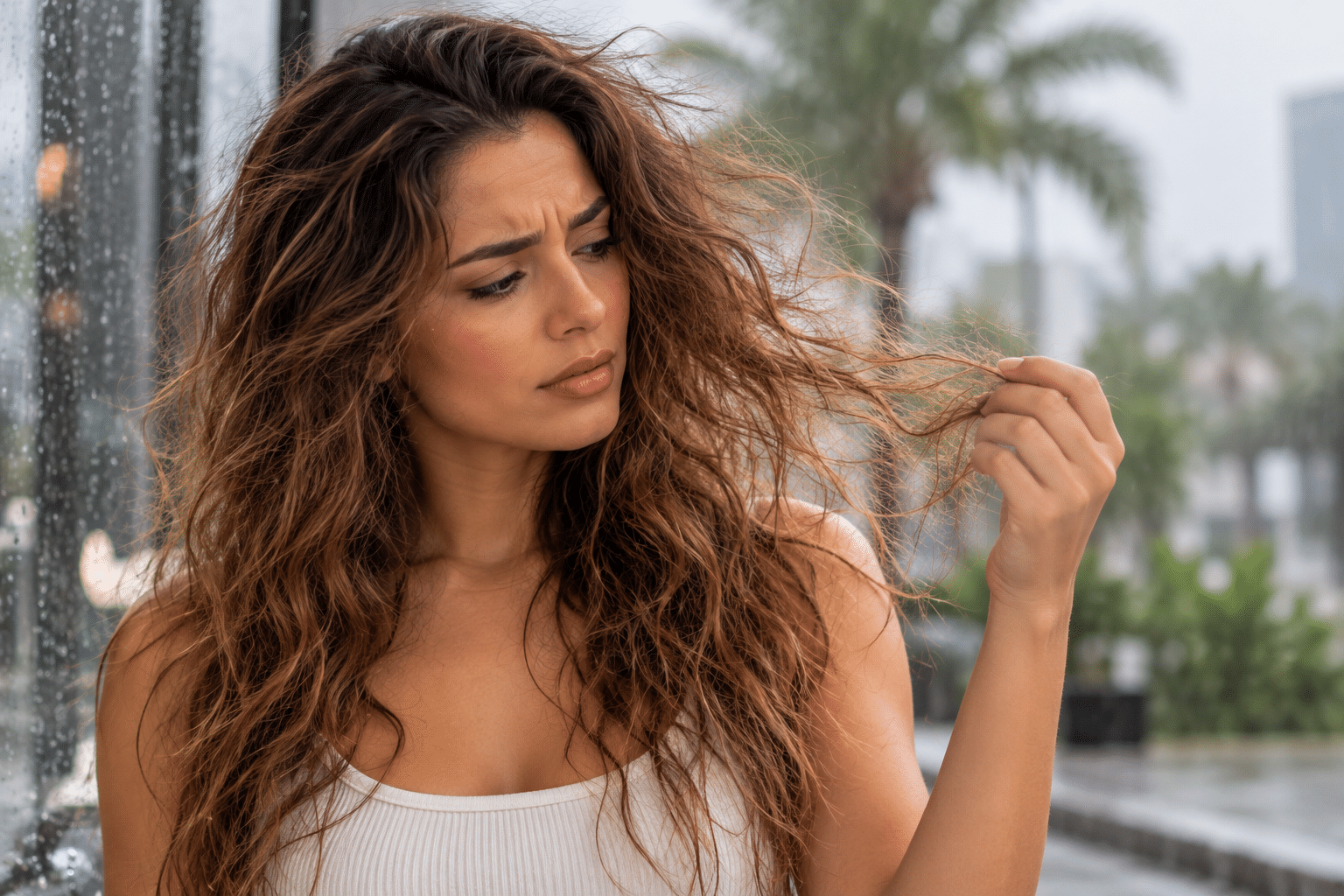
How to Prevent Hair From Frizzing in Humidity
If your hair looks smooth indoors but suddenly becomes puffy, frizzy, or difficult to control when you step outside, humidity may be the reason. Learning how to prevent hair from frizzing in humidity starts with understanding how moisture in the air interacts with your hair.
Although you can’t control the weather, you can change how you wash, dry, condition, style, and protect your hair. A consistent humidity-proof hair routine can help reduce flyaways, maintain smoother texture, and make your hairstyle easier to manage during humid weather.

Why Does Hair Frizz in Humidity?
Hair contains an outer protective layer called the cuticle. When the cuticle doesn’t lie smoothly, moisture from humid air can interact more easily with the hair.
This can change the way individual strands behave, resulting in puffiness, flyaways, loss of definition, or an uneven texture.
Dry, damaged, chemically processed, naturally curly, and porous hair may respond particularly noticeably to changes in moisture.
Why Some Hair Frizzes More Than Other Hair
Your natural texture, porosity, condition, chemical history, styling habits, and environment all influence how your hair responds to humidity.
For example, hair that already lacks moisture may react differently from well-conditioned hair. Likewise, frequent heat styling, chemical processing, and rough handling can affect the condition of the cuticle.
How to Prevent Hair From Frizzing in Humidity Before Styling
Frizz control doesn’t begin when you pick up a flat iron or styling brush. Your washing and conditioning routine can influence how manageable your hair feels before styling even begins.
Start With Appropriate Shampoo and Conditioner
Choose cleansing and conditioning products that fit your hair type and condition. Hair that feels dry may benefit from additional moisture, while finer hair may need lighter products that don’t create unnecessary buildup or weight.
A stylist can help you identify what your hair actually needs instead of choosing products solely because the label says “anti-frizz.”
Don’t Skip Conditioner
Conditioner helps improve softness and manageability. Apply it primarily through the mid-lengths and ends unless your stylist or product instructions recommend otherwise.
Hair that receives appropriate conditioning is generally easier to detangle and style without excessive manipulation.
Add Leave-In Moisture When Your Hair Needs It
A leave-in conditioner can provide another layer of conditioning after washing. Depending on your hair type, you may prefer a lightweight spray, cream, or richer leave-in formula.

Build a Humidity-Proof Hair Routine
A successful humidity-proof hair routine doesn’t require dozens of products. Instead, focus on reducing unnecessary friction, maintaining appropriate moisture, protecting your hair during styling, and choosing products that work with your natural texture.
Gently Remove Excess Water
Avoid aggressively rubbing wet hair with a traditional bath towel. Instead, gently squeeze or blot excess water.
A microfiber towel or soft cotton T-shirt can help reduce the friction created during drying.
Apply Styling Products to Damp Hair
Many smoothing and styling products work best when you distribute them evenly through damp hair before drying.
Follow the product directions and adjust the amount according to your hair’s length, density, and texture.
Use Heat Protection Before Blow-Drying
If you use a blow dryer, flat iron, or curling iron, apply an appropriate heat protectant first.
Heat protection becomes especially important if you regularly style chemically processed or color-treated hair.
How Blow-Drying Can Help Control Frizz in Humidity
Your drying technique can affect the finished appearance of your hair.
If you’re trying to create a smooth finish, direct airflow down the hair rather than blowing it in multiple directions. A concentrator nozzle and appropriate brush can give you more control during styling.
Don’t Keep Adding Heat to Already Dry Hair
More heat doesn’t automatically create smoother hair. Repeatedly passing very hot tools over the same section can increase unnecessary heat exposure.
Instead, use controlled styling techniques and appropriate temperatures for your hair.
Hair Oils and Serums in a Humidity-Proof Hair Routine
Depending on your hair type, a small amount of serum or hair oil can help smooth the finished style and reduce the appearance of flyaways.
However, more product isn’t necessarily better. Too much oil or serum can make some hair types look heavy or greasy.
Start with a small amount, concentrate it primarily on the mid-lengths and ends, and add more only when necessary.
How to Prevent Hair From Frizzing in Humidity Without Constant Heat
You don’t have to straighten your hair every day to manage humidity.
In fact, choosing styles that work with your natural texture can sometimes reduce the amount of manipulation and heat your hair receives.
Work With Your Natural Texture
If your hair naturally curls or waves, consider styles that enhance that pattern instead of constantly trying to remove it.
Proper conditioning and styling products can help create more defined curls or waves while reducing unwanted puffiness.
Try Protective or Controlled Hairstyles
Braids, buns, ponytails, and other controlled hairstyles can help keep hair contained during particularly humid days.

by K8 (https://unsplash.com/@_k8_)
Nighttime Habits That Can Help Reduce Frizz
Your daytime routine isn’t the only factor that affects frizz. Friction during sleep can also influence how your hair looks the following morning.
Consider a Silk or Satin Pillowcase
A smoother sleeping surface may reduce some of the friction between your hair and pillow while you move during the night.
Don’t Sleep With Soaking-Wet Hair
Wet hair can be more vulnerable to stretching and breakage. If you wash your hair at night, give it adequate time to dry before going to bed.
Protect Longer Hair While Sleeping
Depending on your hair texture and length, a loose braid, loose protective style, or appropriate nighttime hair covering may help reduce tangling and friction.
Why Hair Condition Matters in Humid Weather
Sometimes persistent frizz isn’t simply a styling problem. Dryness, chemical processing, repeated heat exposure, and other forms of damage can influence the hair’s texture and manageability.
The American Academy of Dermatology offers healthy hair-care recommendations that include gentle washing, conditioning, and limiting practices that can contribute to damage.
When a Professional Smoothing Treatment May Help
If your daily humidity-proof hair routine isn’t providing enough control, you may want to discuss professional smoothing options with your stylist.
Different treatments serve different purposes, so the right choice depends on your natural texture, hair condition, desired result, and how much smoothing you want.
Keratin Treatments for Humidity Control
Keratin treatments can help make frizzy or difficult-to-manage hair smoother and easier to style. Depending on the treatment and your natural texture, the goal may include reducing frizz, increasing shine, and improving manageability.
Bell Arte Hair Studio offers professional keratin treatments for clients looking for longer-lasting smoothing and frizz control.
Hair Botox for Dry, Frizzy Hair
Hair Botox takes a different approach. Instead of focusing primarily on straightening, the treatment emphasizes conditioning, hydration, softness, and improving the appearance of dry or damaged hair.
Bell Arte also offers Hair Botox treatments for clients who want additional conditioning and smoother, more manageable hair.
Habits That May Make Humidity Frizz Worse
Even a good hair-care routine can struggle if everyday habits repeatedly disrupt the hair.
Over-Washing Your Hair
Your ideal washing frequency depends on your scalp, hair type, activity level, and styling routine. However, unnecessarily frequent washing may leave some hair feeling dry.
Aggressive Towel Drying
Rubbing your hair vigorously with a towel creates friction. Gently blotting or squeezing excess water provides a less aggressive approach.
Excessive Heat Styling
Repeated exposure to high temperatures can contribute to hair damage. Use appropriate heat protection and choose the lowest effective temperature for your hair and styling needs.
Constantly Touching Your Hair
Repeatedly running your fingers through styled hair can disrupt the finished look, separate curls, and contribute to unwanted flyaways.
Can Hair Masks Help With Humidity Frizz?
Hair masks can provide additional conditioning for hair that feels dry or difficult to manage.
However, choose a treatment that suits your hair rather than assuming the richest product will produce the best result. Fine hair and coarse hair often have very different conditioning needs.
How Florida Humidity Can Affect Your Hair
For people living in warm, humid climates such as Tampa, humidity isn’t limited to an occasional rainy day. It can become part of everyday hair management for much of the year.
That makes consistency particularly important. Instead of waiting until your hair becomes frizzy, build moisture balance, careful drying, heat protection, and controlled styling into your regular routine.
A stylist can also help identify whether your hair’s frizz comes primarily from its natural texture, dryness, damage, chemical processing, or a combination of factors.
Frequently Asked Questions About Preventing Hair Frizz in Humidity
Why Does My Hair Get So Frizzy When It’s Humid?
Humidity introduces additional moisture into the environment. Hair texture, porosity, dryness, damage, and the condition of the cuticle can all influence how strongly your hair reacts to that moisture.
How Can I Prevent My Hair From Frizzing in Humidity?
Start with appropriate shampoo and conditioner, reduce friction while drying, use leave-in conditioning when needed, apply heat protection, use controlled drying techniques, and choose styling products appropriate for your hair type.
Does Hair Oil Stop Humidity Frizz?
Hair oil can help smooth the appearance of some hair types and add shine, but it isn’t a complete solution for everyone. Use a small amount and focus primarily on the mid-lengths and ends.
Should I Straighten My Hair to Stop Frizz?
Not necessarily. Straightening can temporarily create a smoother appearance, but repeated heat exposure can affect hair condition. You can also manage frizz by working with your natural texture and improving your overall hair-care routine.
Can Damaged Hair Become Frizzier in Humidity?
Damage can affect the hair’s outer structure and manageability, which may make frizz more noticeable. Appropriate conditioning and reducing unnecessary heat or chemical stress can help support healthier-looking hair.
Can a Salon Treatment Help With Humidity Frizz?
Professional treatments may help depending on your hair and goals. Keratin treatments focus more heavily on smoothing and manageability, while Hair Botox emphasizes conditioning, softness, and improving the appearance of dry or damaged hair.
Create a Humidity-Proof Hair Routine That Works for You
Learning how to prevent hair from frizzing in humidity doesn’t mean trying every anti-frizz product you can find. A better approach starts with understanding your hair’s texture, condition, moisture needs, and styling habits.
Build a consistent humidity-proof hair routine around appropriate cleansing and conditioning, gentle drying, controlled styling, heat protection, and products suited to your individual hair.
If humidity continues to make your hair difficult to manage, talk with a professional stylist about your hair condition and whether a salon smoothing or conditioning treatment could complement your home routine.