
Individual Hair Extensions vs Sew-Ins: Which Method Fits You?
Individual hair extensions and sew-in extensions can both add length, volume, fullness, and styling versatility, but the two methods attach to natural hair very differently. Those differences can affect comfort, movement, maintenance, blending, styling, and whether a particular method is appropriate for your natural hair.
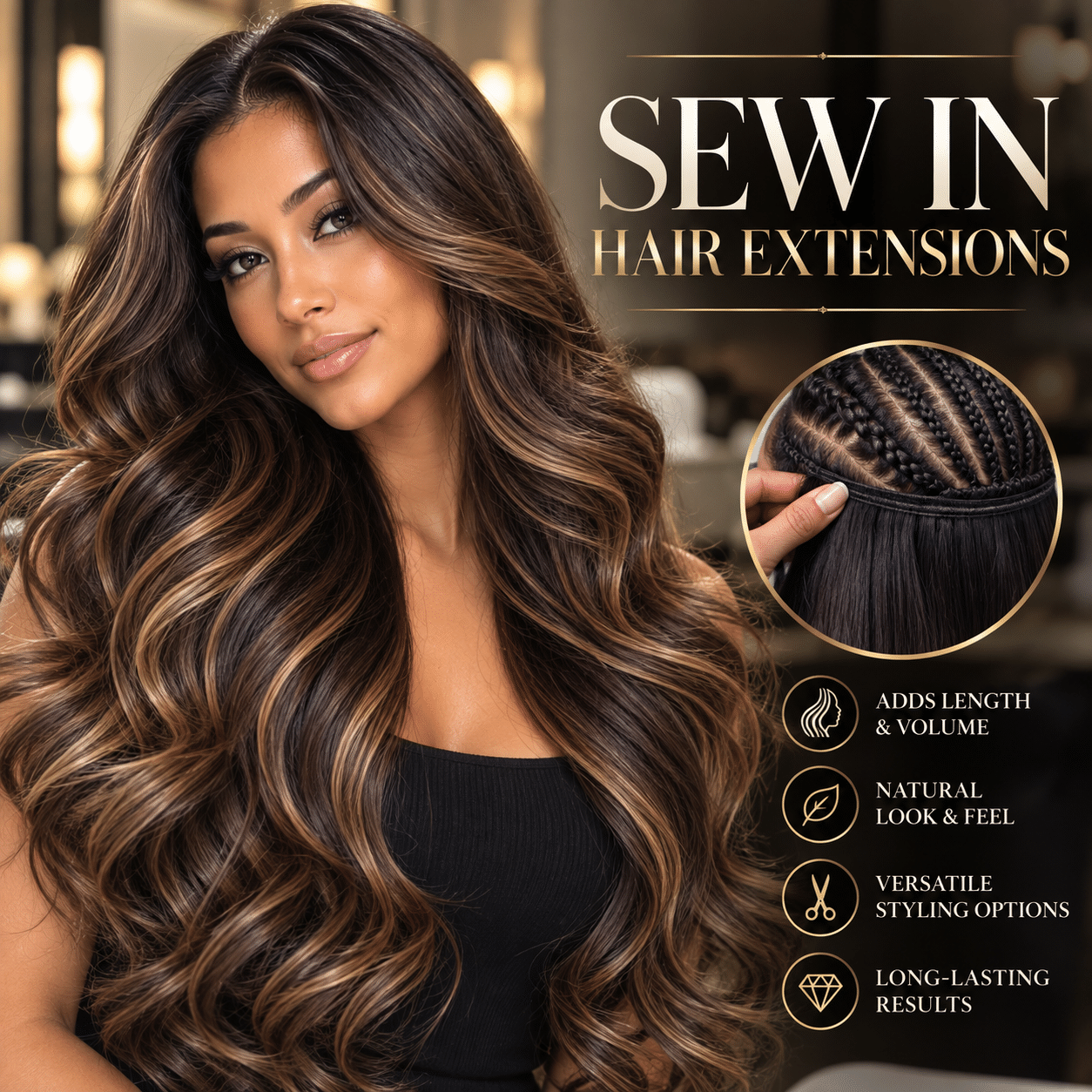
Sew-in extensions traditionally attach extension wefts to a braided foundation. In comparison, individual methods attach smaller sections of extension hair throughout the natural hair using systems such as keratin bonds, K-Tips, I-Tips, or micro links.
Understanding the differences between these extension methods can help you have a more informed conversation with an extension specialist before choosing your installation.

Why Does Your Hair Extension Method Matter?
Hair extensions aren’t one universal service. Different methods distribute extension hair and attachment weight differently across the head.
The appropriate choice may depend on:
- Natural hair density
- Hair texture
- Strand thickness
- Current hair condition
- Desired length
- Desired volume
- Daily hairstyle
- Lifestyle
- Maintenance preferences
- Previous extension experience
For that reason, a method that works beautifully for one client may not be the best choice for another.
What Are Individual Hair Extensions?
Individual hair extensions divide extension hair into smaller sections rather than attaching an entire weft along a track.
Examples include:
- Keratin bond extensions
- K-Tip extensions
- I-Tip extensions
- Micro link extensions
Because these extensions are distributed through smaller attachment points, individual methods can provide considerable flexibility in placement, blending, movement, and customization.
What Are Sew-In Hair Extensions?
Traditional sew-in hair extensions generally use extension hair attached in wefts. The natural hair is braided to create a foundation, and the extension wefts are then sewn onto that foundation.
This creates a different attachment system from individual methods such as keratin bonds or I-Tips.
Sew-ins have been used for many years and can work well for appropriate hair types when professionally installed and maintained. However, they aren’t automatically the best method for every client.
Individual Hair Extensions vs Sew-Ins: The Main Difference
The biggest difference involves how the extension hair attaches to your natural hair.
A sew-in distributes extension hair along wefts attached to a braided foundation. Individual extensions distribute smaller sections across multiple attachment points.
Neither description alone determines which method is appropriate. Your natural hair should be evaluated before deciding.
How Sew-In Hair Extensions Are Installed

A traditional sew-in begins by creating braids from the natural hair. These braids act as the supporting structure for the extension wefts.
The stylist then attaches the weft hair to the braided sections using thread.
The exact installation pattern depends on the client’s hair, desired style, amount of extension hair, and stylist’s technique.
How Individual Hair Extensions Are Installed
The installation process depends on the individual extension system being used. Instead of attaching a complete weft to a braided foundation, the stylist works with smaller sections of extension hair.
These smaller attachment points allow the stylist to control placement throughout different areas of the head.
K-Tips, keratin bonds, I-Tips, and micro links are examples of methods that use individual extension sections.
Keratin Bond Individual Hair Extensions
Keratin bond extensions use individual extension sections attached to small sections of natural hair.
This method allows the stylist to customize where individual pieces are placed throughout the head.
Because the attachments are divided into smaller sections, keratin extensions can provide natural movement while allowing the stylist to control how much extension hair is used in different areas.
K-Tip Individual Hair Extensions
K-Tips are another form of individual extension. Small sections of extension hair are attached to corresponding sections of natural hair using keratin bonds.
Strategic placement can help the extensions move naturally while remaining discreet within the client’s natural hair.
I-Tip Individual Hair Extensions
I-Tip extensions also use individual extension sections, but their attachment method differs from keratin bonds.
The extensions are secured using small beads rather than keratin adhesive.
One distinction of this approach is that the installation doesn’t require keratin adhesive at the attachment point.
Micro Link Individual Hair Extensions
Micro link extensions use small attachment points to secure extension hair to sections of natural hair.
As with other professional methods, proper placement and weight are important.
The stylist should evaluate whether the client’s natural hair can comfortably support the selected extensions before installation.
What Are Tape-In Hair Extensions?
Tape-in extensions use thin sections of extension hair that attach around sections of natural hair.
The attachment lies relatively flat against the head, making tape-ins another option for clients seeking additional length or volume.
Tape-ins aren’t individual strand extensions in the same way as K-Tips or I-Tips, but they also don’t require the braided foundation associated with a traditional sew-in.
Choosing Individual Hair Extensions for Your Natural Hair
Your natural hair should play a major role in selecting an extension method.
A professional extension specialist should examine:
- Hair density
- Texture
- Strand strength
- Current condition
- Scalp condition
- Existing breakage
- Previous chemical services
- Previous extension use
Simply choosing the method that looks best online isn’t enough. A consultation allows the stylist to consider how a particular attachment method may work with your actual hair.
Individual Hair Extensions for Fine Hair
Clients with fine or delicate hair require careful evaluation before extensions are installed.
The amount of extension hair, attachment size, placement, and overall weight should be appropriate for the natural hair.
Adding excessive weight to delicate sections can create unnecessary tension regardless of which extension method is used.
If fine or thinning hair is your primary concern, Bell Arte provides additional information about hair extensions for thin and fine hair and the factors considered before installation.
Sew-In Extensions for Thick Hair
Sew-in extensions have traditionally been popular with clients whose natural hair can support a braided foundation and extension wefts.
However, natural hair density alone shouldn’t determine the method.
Texture, condition, desired styling, maintenance preferences, and long-term hair goals should also be considered.
Which Hair Extensions Look the Most Natural?
Natural-looking results depend on considerably more than the attachment method.
Successful blending also requires:
- Accurate color matching
- Compatible extension texture
- Appropriate density
- Strategic placement
- Professional cutting and blending
- High-quality extension hair
- Proper home maintenance
Even premium extension hair can look unnatural when the color, density, or placement doesn’t complement the client’s natural hair.
Hair Quality Matters With Individual Hair Extensions
The quality of the extension hair has a major influence on how the finished style looks, feels, moves, and behaves during styling.
Human hair is commonly preferred for professional extensions because it can provide a natural appearance and styling experience.
Remy human hair is particularly well known because its cuticles remain aligned in the same direction during processing. This construction can help reduce unnecessary tangling when the hair is properly maintained.
Color Matching Individual Hair Extensions
Color matching doesn’t always mean choosing one extension shade that appears close to your natural hair.
Many people have several tones throughout their hair. A stylist may blend multiple extension shades to reproduce highlights, lowlights, root depth, or dimensional color.
Careful color matching can make the transition between natural hair and extension hair considerably less noticeable.
Extension Texture Should Match Too
Color isn’t the only characteristic that affects blending.
Extension texture should also complement your natural hair and the way you normally style it.
If the extension hair behaves completely differently from your natural hair, daily styling may become more complicated.
Individual Hair Extensions vs Sew-Ins for Movement
The attachment design can influence how the extensions move with the natural hair.
Individual extensions distribute smaller sections throughout the head, allowing the stylist to customize placement around different areas.
Sew-ins distribute hair along tracks, creating a different type of movement and weight distribution.
Your preferred hairstyles can help determine which approach makes sense.
Consider How You Normally Wear Your Hair
Tell your extension specialist how you normally style your hair before choosing a method.
For example, mention whether you regularly wear:
- High ponytails
- Low ponytails
- Buns
- Braids
- Half-up styles
- Straight hair
- Waves
- Curls
Placement can sometimes be customized to make your preferred hairstyles easier to achieve while keeping attachment areas discreet.
How Much Length Can Individual Hair Extensions Add?
Extensions can create significant additional length, but longer isn’t always automatically better.
The desired length should still look balanced with your natural hair density and the amount of extension hair being added.
Your stylist can help determine a length that produces the appearance you want without unnecessarily overloading your natural hair.
Individual Hair Extensions for Volume
Not everyone wants dramatically longer hair.
Individual extensions can also be strategically placed to create additional fullness and density.
For someone happy with their existing length but wanting a fuller appearance, carefully selected extensions may provide volume without creating a dramatic length transformation.
Do Individual Hair Extensions Damage Natural Hair?
Hair extensions can contribute to damage when they’re too heavy, create excessive tension, are installed incorrectly, aren’t properly maintained, or are removed improperly.
However, damage isn’t an automatic consequence of wearing extensions.
Professional selection, appropriate weight, correct placement, maintenance, and proper removal all matter.
Why Hair Extension Weight Matters
Natural hair has to support the added extension hair.
Therefore, more extension hair isn’t always better.
Your specialist should consider how much additional weight your natural hair can reasonably support and distribute that weight appropriately throughout the installation.
Comfort Matters During Extension Installation
Hair extensions shouldn’t simply be judged by how they look in photographs.
Comfort is important too.
Some awareness of a new installation may be expected initially, but significant pain or excessive pulling shouldn’t simply be ignored.
If your extensions feel unusually tight or uncomfortable, contact your stylist rather than waiting for the problem to become worse.
How Often Do Individual Hair Extensions Need Maintenance?
Maintenance varies by extension method, natural hair growth, installation, and individual client.
As your natural hair grows, attachment points move farther away from the scalp. Some extension methods require repositioning or maintenance as this occurs.
Your stylist should explain the expected maintenance schedule before installation.
Individual Hair Extension Maintenance at Home
Professional installation is only the beginning. How you care for your extensions between appointments can influence both their appearance and condition.
Your exact instructions should come from your stylist because different attachment methods may require different care.
General recommendations may include:
- Brush gently
- Avoid pulling aggressively at attachment areas
- Detangle carefully
- Follow the recommended washing routine
- Use extension-appropriate products
- Protect hair before heat styling
- Follow nighttime care instructions
- Attend scheduled maintenance appointments
How Should You Brush Individual Hair Extensions?
Use the brush recommended for your extension method and support the hair while brushing to avoid unnecessary pulling at the attachment areas.
Begin detangling toward the ends and gradually work upward rather than aggressively dragging a brush from the scalp through tangled hair.
Your stylist can demonstrate the appropriate technique after installation.
Washing Individual Hair Extensions Properly
Extension washing instructions can vary depending on the attachment method.
Avoid aggressive scrubbing, twisting, or tangling around attachment areas.
Follow the shampoo, conditioner, and washing recommendations provided by your extension specialist.
Can You Use Heat on Human Hair Extensions?
Human hair extensions can generally be styled with many of the same tools used on natural hair, but excessive heat can still affect both natural and extension hair.
Use appropriate heat protection and avoid unnecessarily high temperatures.
The American Academy of Dermatology provides recommendations for reducing hair damage, including precautions involving excessive heat styling.
Sleeping With Individual Hair Extensions
Your extension specialist should explain how to prepare your hair before sleeping.
Depending on the method and hair length, recommendations may include gently securing the hair to reduce unnecessary tangling while you sleep.
Avoid going to bed with heavily tangled hair or ignoring attachment areas during your daily routine.
Swimming With Hair Extensions
If you swim regularly, tell your stylist before choosing an extension method.
Pool chemicals, saltwater, frequent wetting, tangling, and repeated washing can influence maintenance.
Your stylist can recommend how to secure, rinse, wash, and care for your extensions after swimming.
Professional Removal of Individual Hair Extensions
Removing extensions properly is just as important as installing them correctly.
Different attachment systems require different professional removal procedures.
Don’t pull, cut, peel, or force professional extensions from your natural hair at home.
Improper removal can create unnecessary breakage and make it difficult to distinguish extension hair from your own hair.
Choosing an Individual Hair Extension Method
You don’t need to arrive at your consultation already knowing which extension system you want.
In fact, choosing the method before your natural hair has been evaluated can sometimes work backward.
Instead, explain your goals first.
Tell the stylist:
- How much length you want
- How much volume you want
- How you normally style your hair
- How active your lifestyle is
- How much maintenance you’re comfortable with
- Your previous experience with extensions
- Any concerns about fine, thin, or delicate hair
The stylist can then evaluate which available method best fits those priorities.
Questions to Ask an Extension Specialist
Before committing to an installation, ask:
- Which extension methods do you offer?
- Why do you recommend this method for my hair?
- What type of extension hair will be used?
- How will you match my color and texture?
- How much extension hair will I need?
- What maintenance is required?
- How frequently will I need salon appointments?
- How should I wash and brush the extensions?
- Can I wear my normal hairstyles?
- How are the extensions removed?
- What is included in the total price?
A professional consultation should give you enough information to understand both the initial transformation and the ongoing commitment.
Does Bell Arte Hair Studio Offer Sew-In Hair Extensions?
Bell Arte Hair Studio does not offer traditional sewn-in or weft extension installations.
Instead, Bell Arte specializes in professional extension methods that can be customized according to the client’s natural hair, including tape-in extensions, K-Tip and keratin bond extensions, I-Tip extensions, and micro link extensions.
The appropriate method is selected after evaluating the client’s natural hair, desired length, volume, lifestyle, and maintenance preferences.
Individual Hair Extensions at Bell Arte Hair Studio
Bell Arte Hair Studio specializes in personalized human hair extension services in a private Tampa salon setting.
Available extension services include:
- Premium human hair extensions
- Tape-in extensions
- K-Tip extensions
- Keratin bond extensions
- I-Tip extensions
- Micro link extensions
- Extension maintenance
- Professional removal
- Hair extension correction
- Customized blending and styling
You can learn more about Bell Arte’s professional hair extension services and the extension methods available at the Tampa studio.
Hair Extension Safety and Natural Hair Care
Extensions should complement your natural hair rather than causing unnecessary stress.
Good extension care includes appropriate installation, gentle daily handling, professional maintenance, and proper removal.
The American Academy of Dermatology provides general healthy hair-care recommendations for washing, conditioning, drying, and styling natural hair.
Frequently Asked Questions About Individual Hair Extensions
Are Individual Hair Extensions the Same as Sew-Ins?
No. Individual extensions attach smaller extension sections throughout the natural hair. Traditional sew-ins use extension wefts attached to a braided foundation.
Are K-Tip Extensions Individual Hair Extensions?
Yes. K-Tips use individual extension sections attached to small sections of natural hair using keratin bonds rather than being sewn onto braided tracks.
Are I-Tip Extensions Individual Hair Extensions?
Yes. I-Tip extensions use individual extension sections secured with small beads rather than thread and a braided foundation.
Which Individual Hair Extensions Are Best?
There isn’t one individual extension method that is best for every person. Natural hair density, texture, condition, desired result, styling habits, and maintenance preferences should all be considered.
Are Individual Hair Extensions Good for Fine Hair?
Fine hair requires careful evaluation because extension weight and placement are particularly important. An extension specialist should examine your natural hair before recommending a method.
Can Individual Hair Extensions Add Only Volume?
Yes. Extensions don’t have to create dramatic length. They can also be strategically used to create additional fullness and volume.
Can You Wash and Style Individual Hair Extensions?
Yes, although the exact washing, brushing, conditioning, and styling routine depends on the attachment method. Follow the instructions provided by your extension specialist.
Should I Remove Individual Hair Extensions Myself?
No. Professional extension systems have specific removal procedures. Having them professionally removed helps reduce unnecessary pulling, cutting, or breakage of your natural hair.
Individual Hair Extensions: Start With Your Natural Hair
Individual hair extensions offer several options for clients seeking customized length, fullness, and volume. However, the attachment method is only one part of the decision. Your natural hair, desired result, styling routine, comfort, and maintenance preferences should guide the final recommendation.
Traditional sew-in hair extensions use a different attachment approach and may suit different clients. Rather than choosing a technique simply because it’s popular, begin with a professional evaluation of your natural hair.
Bell Arte Hair Studio does not offer traditional sew-in or weft extensions. Instead, the studio specializes in customized professional extension methods including tape-ins, K-Tips, keratin bonds, I-Tips, and micro links, with the goal of selecting an approach appropriate for each client’s natural hair.