
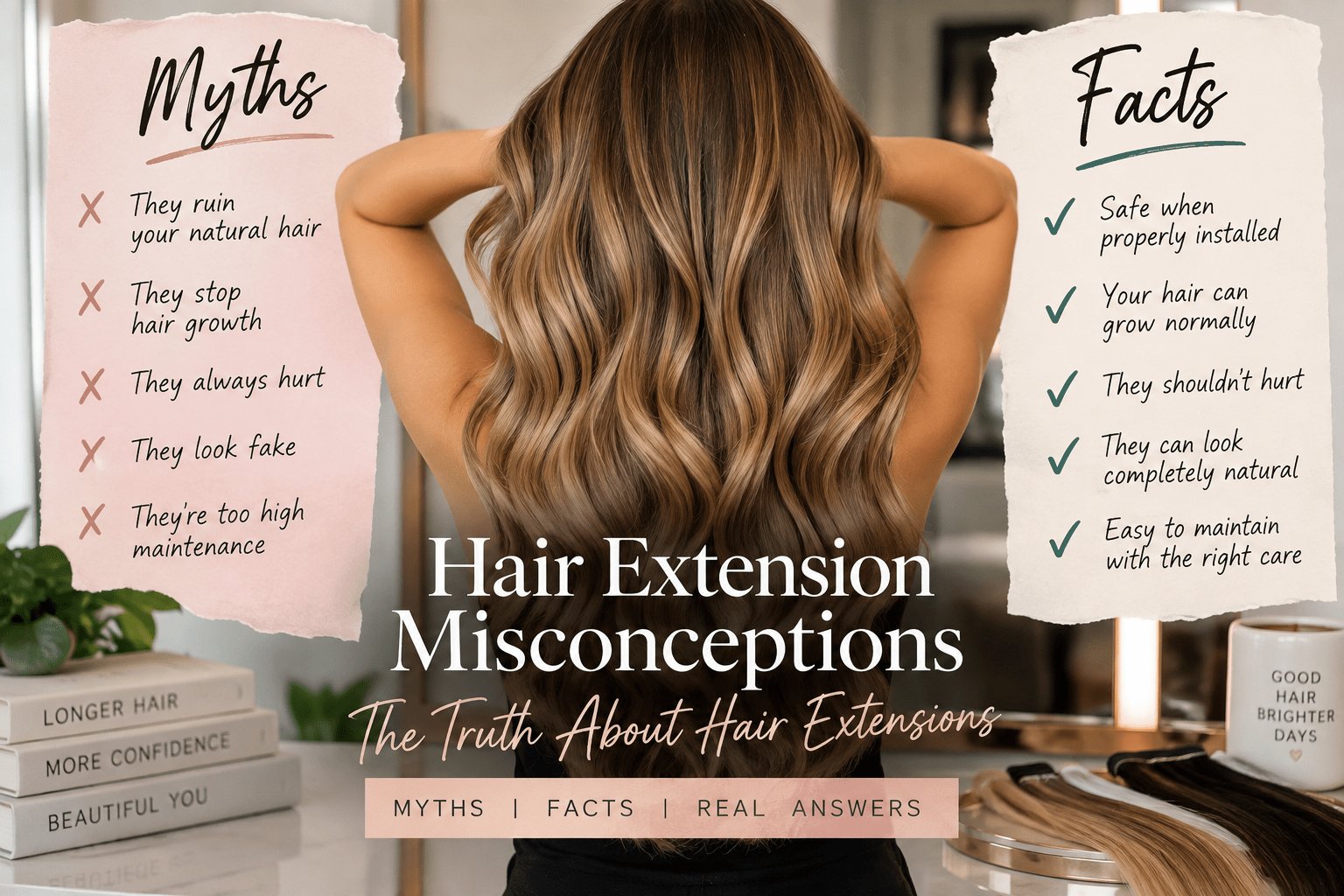
Hair Extension Myths and Facts: What You Need to Know
Have you ever scrolled through your social media feed, admiring cascading, voluminous locks, only to wonder if that flawless look is attainable for your own hair? Hair extension myths can make it difficult to separate genuine concerns from misinformation. Human hair extensions have revolutionized the beauty industry, offering instant length, incredible volume, and the ability to experiment with color without a long-term commitment.
If you are considering enhancing your look, it is important to separate fact from fiction. Today, we are taking a closer look at the most common hair extension myths and the facts behind them. Understanding how professional extensions actually work can help you make a more informed and confident decision about your hair journey.
Hair Extension Myths About Damage and Hair Growth
It is perfectly normal to have questions before sitting in the salon chair. Some of the most persistent concerns involve natural hair damage, growth, and discomfort. Let’s tackle these concerns one at a time.
Myth 1: Hair Extensions Will Ruin Your Natural Hair
One of the most frequent questions stylists hear is, “Do hair extensions cause permanent damage?” Properly selected and professionally installed extensions do not automatically damage natural hair. However, extensions that are too tight, too heavy, improperly installed, or poorly maintained can place unnecessary stress on the hair and scalp.
According to the American Academy of Dermatology, professional installation, proper hair care, and avoiding excessive tension are important for helping protect natural hair while wearing extensions.
Problems are more likely to occur because of factors such as:
- Improper installation or excessive tension.
- Extensions that are too heavy for your natural hair density.
- Neglecting your at-home maintenance routine.
- Leaving extensions installed longer than recommended.
- Repeated pulling or stress around delicate areas such as the hairline.
When extensions are correctly matched to your hair type, professionally installed, and properly maintained, the risk of unnecessary stress and damage can be greatly reduced.
If you are considering professional extensions, learn more about human hair extensions in Tampa and the importance of choosing the right method for your natural hair.
Myth 2: Your Hair Won’t Grow With Extensions In
Another widespread hair extension myth is that extensions stop your natural hair from growing. Your natural hair continues to grow from follicles within the scalp while extensions are attached to the existing hair shaft.
Extensions do not simply switch off your natural growth cycle. What matters is avoiding unnecessary tension, breakage, and improper maintenance as the natural hair continues to grow.
Some people also use extensions while growing out a shorter haircut or reducing the amount of daily heat styling performed on their natural hair.
Myth 3: Extensions Are Supposed to Hurt
If you are wondering, “Why do my hair extensions hurt?” several days after your appointment, you should contact your stylist. Some people may notice mild tightness or awareness of the additional hair shortly after installation, but persistent pain, headaches, pulling, or scalp irritation should not simply be ignored.
Discomfort can indicate that an extension has been installed too tightly or that too much weight or tension has been placed on a small section of natural hair.
Repeated tension can contribute to a condition known as traction alopecia. The American Academy of Dermatology explains that hairstyles and extensions that continually pull on the hair can eventually contribute to hair loss.
Proper installation and thoughtful weight distribution are therefore important. A qualified stylist should be willing to examine and adjust extensions that feel excessively tight or uncomfortable.
Hair Extension Myths About Quality and Extension Types
The hair extension market is enormous, and knowing what you are purchasing is an important part of achieving a natural-looking result.
Fact: Hair Quality Makes or Breaks Your Look
Understanding the difference between Remy hair and synthetic fibers is an important step toward achieving a natural appearance.
Synthetic extensions are manufactured fibers rather than human hair. Depending on the quality, they can have more shine than natural hair, may be more prone to tangling, and frequently have greater restrictions regarding heat styling.
Remy human hair is a popular premium choice because the hair cuticles are kept aligned in the same direction. Proper cuticle alignment can help reduce tangling and create smoother, more natural movement.
Common signs of high-quality human hair include a soft texture, natural movement, minimal excessive shedding, good density from top to bottom, and a finish that blends naturally with the client’s own hair.
Fact: The Application Method Should Match Your Lifestyle
There is no one-size-fits-all approach to professional extensions. When comparing options such as keratin bond vs. tape-in extensions, the best choice depends on your natural hair, desired style, maintenance preferences, and everyday routine.
- Keratin Bonds (K-Tips): Individual extension strands are attached to sections of natural hair using a keratin-based bond. Because each strand moves independently, K-Tips can provide excellent movement and styling flexibility. Wear time varies based on growth, maintenance, hair type, and the stylist’s recommendations.
- Tape-Ins: Thin extension wefts are attached around sections of natural hair using professional extension tape. They can lie very flat against the head and are generally faster to install than individual keratin bonds. Move-up appointments are required as natural hair grows.
If you are new to extensions or uncertain which method will work best for you, a professional consultation can evaluate your natural hair density, texture, lifestyle, and desired result before choosing an application method.
You can also visit Bell Arte Hair Studio to learn more about professional hair extension options and personalized extension services.
Everyday Hair Extension Care: Myths vs. Reality
Another group of common hair extension myths involves maintenance. Many people imagine that extensions require hours of complicated upkeep every day. In reality, proper maintenance generally involves making a few important adjustments to your normal hair care routine.
Myth: You Have to Replace Every Hair Product You Own
You do not necessarily need an entirely new collection of products, but you should pay attention to the products being used around your extensions and attachment points.
A gentle, moisturizing shampoo and conditioner can help prevent unnecessary dryness. Extensions do not receive natural scalp oils in exactly the same way that your own growing hair does, so maintaining moisture throughout the mid-lengths and ends is especially important.
With tape-ins, keratin bonds, and other professionally attached methods, avoid applying heavy oils or conditioners directly onto attachment areas unless your stylist specifically recommends doing so. Certain products can weaken extension attachment points or contribute to slippage.
Fact: A Daily Hair Extension Care Routine Can Extend Their Life
Implementing a simple daily hair extension care routine can help keep extensions looking smoother and reduce unnecessary tangling.
- Brushing: Gently brush your extensions regularly with a brush recommended for your extension method. Begin at the ends and gradually work upward instead of aggressively pulling through tangles from the roots.
- Attachment Care: Support the hair near the attachment points while brushing to reduce unnecessary pulling.
- Hydration: Apply a lightweight leave-in conditioner or extension-compatible serum through the mid-lengths and ends when additional moisture is needed.
- Regular Maintenance: Attend your recommended salon maintenance appointments instead of allowing extensions to grow too far away from their original placement.
Fact: You Can Still Heat Style Human Hair Extensions
High-quality human hair extensions can generally be curled, straightened, and blow-dried, although proper heat protection is important.
Apply a thermal protectant before using hot tools and use the lowest temperature needed to achieve your desired result. Excessive heat can gradually dry and weaken both natural hair and extension hair.
The American Academy of Dermatology recommends limiting excessive heat styling because repeated high temperatures can weaken and damage hair.
With bonded or taped methods, avoid placing hot styling tools directly against keratin bonds, adhesive tabs, or other attachment areas.
Myth: You Can’t Sleep or Swim Normally
Having hair extensions does not mean giving up an active lifestyle, but a few precautions can make a major difference.
- Sleeping: Knowing how to sleep with hair extensions safely is important. Avoid going to bed with soaking-wet extensions. Gently detangle and dry the hair before bedtime, then secure longer extensions in a loose braid or another stylist-recommended style. A silk or satin pillowcase can also help reduce friction.
- Swimming: Pools and salt water can dry both natural hair and extension hair. Before swimming, gently secure your extensions to reduce tangling. Rinse the hair thoroughly with fresh water afterward and follow the after-swimming routine recommended for your particular extension method.
Hair Extension Myths About Blending and Lifespan
Some of the final misconceptions surrounding extensions involve how obvious they will look and how long professional human hair extensions should last.
Myth: Hair Extensions Always Look Fake and Obvious
We’ve all seen extension installations where a noticeable line separates shorter natural hair from longer extension hair. However, this usually reflects poor placement, blending, color matching, or haircutting rather than an unavoidable characteristic of extensions themselves.
One important consideration is understanding how to hide hair extensions in thin hair. A skilled stylist can strategically place extensions so attachment points are less likely to show around the crown and hairline.
The haircut and blending process are equally important. Texturizing and carefully blending the client’s natural ends into the extension hair can create a much more seamless transition.
Color matching is also crucial. Extensions may need multiple shades, highlights, lowlights, or customized root coloring to reproduce the dimension already present in the client’s natural hair.
Fact: Hair Extensions Don’t Last Forever
Even premium human hair eventually begins to show wear. The average lifespan of professional human hair extensions depends on the quality of the extension hair, application method, amount of heat styling, products used, frequency of washing, daily maintenance, and how consistently professional maintenance appointments are followed.
It is also important to distinguish between the lifespan of the extension hair itself and the lifespan of a particular installation.
Tape-ins and reusable weft systems may allow quality hair to be reused through multiple maintenance appointments when the hair remains in good condition. Keratin bonds are generally removed after their recommended wear period and replaced or reinstalled according to the stylist’s method and the condition of the client’s natural hair.
Your stylist should provide specific maintenance and replacement recommendations based on your individual extension method rather than relying solely on a universal timeline.
The Truth Behind Common Hair Extension Myths
Navigating the world of hair enhancements does not have to be intimidating. Once the most common hair extension myths are separated from the facts, it becomes much easier to make informed decisions about your hair.
Extensions do require proper installation, appropriate weight distribution, regular maintenance, gentle styling, and good at-home care. However, the idea that extensions automatically destroy natural hair, prevent growth, always hurt, or inevitably look fake is misleading.
High-quality hair, professional installation, realistic expectations, and a consistent maintenance routine are some of the most important factors behind a beautiful extension result.
If you are considering a transformation, schedule a professional consultation to determine which extension method best fits your natural hair, lifestyle, desired length, volume, and long-term maintenance preferences.