
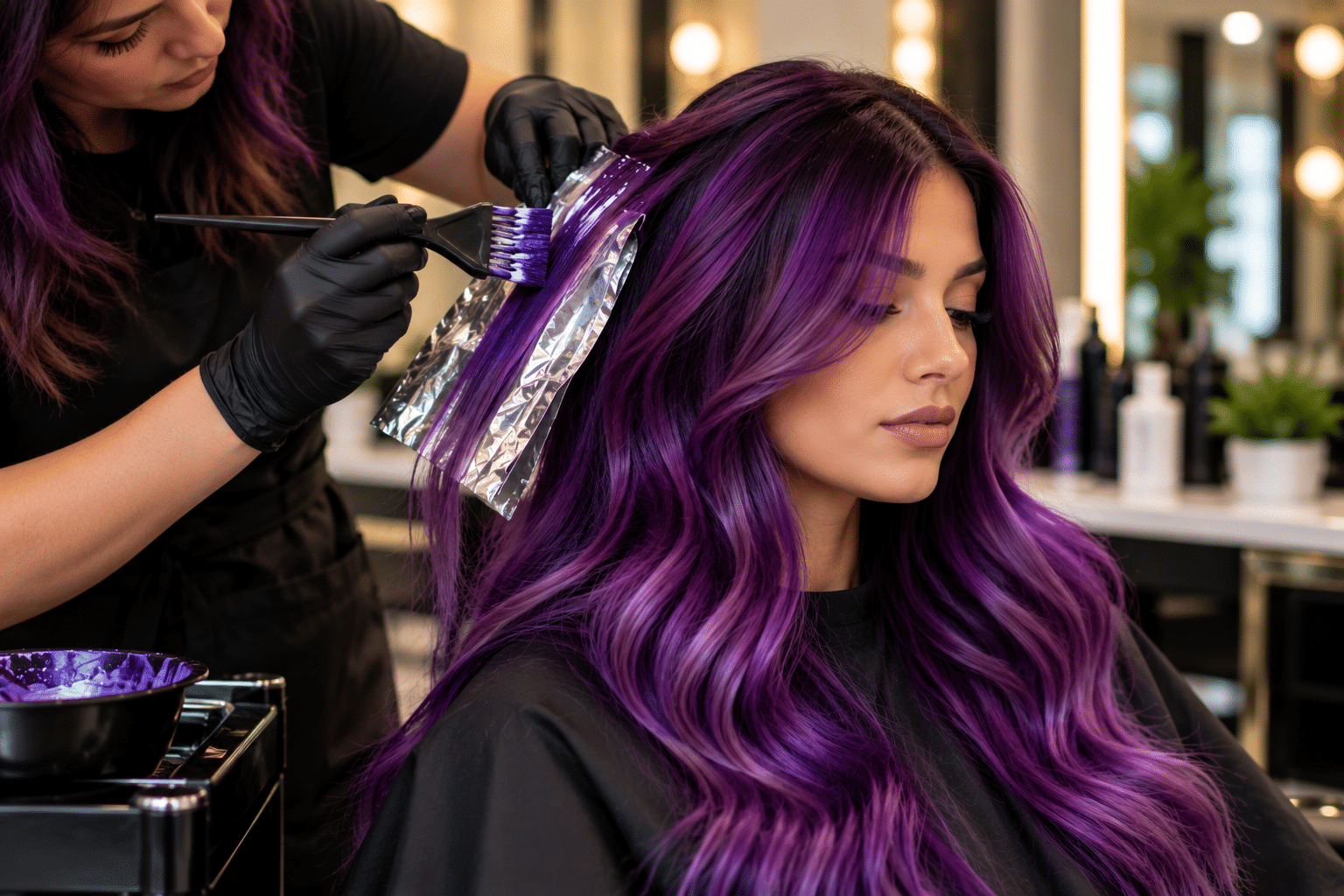
Violet Hair Color Transformation: Shades, Coloring Process & Maintenance
A violet hair color transformation can range from a subtle deep-purple tint to an intense jewel-toned violet or soft lavender finish. However, creating the right shade involves more than simply choosing purple from a color chart. Your natural hair color, previous coloring, hair condition, desired intensity, and maintenance preferences can all affect the final result.
Understanding the professional coloring process before your appointment can help you choose a violet shade that fits both your style and the amount of upkeep you’re comfortable with.
Additionally, learning about maintaining violet hair color beforehand can help you understand what you may need to do to keep your new shade looking vibrant after leaving the salon.

What Is a Violet Hair Color Transformation?
Violet hair color covers a surprisingly broad spectrum. Some shades contain stronger blue undertones, while others lean toward warmer red-purple tones.
The finished color can also range from extremely dark violet that appears almost black in certain lighting to bright purple, dusty violet, lavender, or pastel purple.
Because of these differences, bring reference photographs to your consultation whenever possible. What one person calls violet may look completely different from another person’s idea of purple.
Choosing a Shade for Your Violet Hair Color Transformation
The right violet depends on the appearance you want and the hair you’re starting with. Your stylist can customize the formula rather than relying on one standard shade.
Deep Violet Hair
Deep violet combines dark purple tones with significant depth. Depending on the formula, the color may appear subtle indoors and reveal considerably more purple under brighter lighting.
Jewel-Toned Violet Hair
A jewel-toned violet creates a richer and more noticeable purple appearance. Your stylist can combine violet, plum, and other complementary tones to customize the finished color.
Lavender and Soft Violet Hair
Lavender produces a considerably lighter result. Because pastel colors generally need a lighter foundation to appear clearly, creating lavender on naturally dark hair can involve a very different process from creating deep violet.
Plum and Red-Violet Hair
Plum and red-violet incorporate warmer undertones. These shades can provide an alternative for someone who wants noticeable purple without moving toward a cooler blue-violet result.
Does Hair Need Lightening Before Going Violet?
Not every violet transformation requires the same amount of lightening.
Your starting color and desired result determine how much preparation your hair may need. For example, creating subtle deep violet over brunette hair is very different from creating bright lavender on the same starting color.
If your desired shade needs a significantly lighter foundation, your stylist may recommend lightening your hair before applying the final violet formula.
Violet Hair Color Transformation on Dark Hair
Dark hair can create a beautiful foundation for deep violet, plum, and purple-black shades. However, extremely bright or pastel violet generally needs a lighter starting point for the color to appear clearly.
Previous artificial color can also influence the process. Therefore, tell your stylist about permanent color, box dye, bleach, highlights, or other chemical services you’ve previously used.
What Happens During a Violet Hair Color Consultation?

A consultation gives your stylist an opportunity to evaluate your existing hair and understand the exact result you want.
During your consultation, discuss:
- Your natural hair color
- Your complete color history
- Previous lightening or highlights
- The violet shade you want
- How bright or subtle you want the purple to appear
- Your normal styling routine
- Your desired maintenance level
- The current condition of your hair
Bring several photographs rather than relying exclusively on color names. Pictures give your stylist a clearer understanding of the depth, undertone, brightness, and placement you’re imagining.
How Professional Stylists Create Violet Hair Color
After evaluating your hair, your stylist can determine the coloring process needed to achieve your desired shade.
If your hair needs lightening, your stylist may complete that step before applying the violet formula. Clients seeking deeper purple tones may need a different process.
Bell Arte Hair Studio offers professional hair color and highlighting services that stylists customize according to each client’s existing hair, desired shade, and overall color goals.
Creating Dimension With Violet Hair Color
Your stylist doesn’t need to apply violet as one uniform shade from roots to ends.
Instead, a stylist can combine darker and lighter purple tones, maintain a deeper root, add strategically placed violet pieces, or blend purple with your existing color.
These dimensional coloring techniques can create additional movement and visual depth.
Can Balayage Create a Violet Hair Color Transformation?
Yes. Balayage refers primarily to a placement technique rather than one particular color.
Therefore, a stylist can combine customized balayage placement with violet tones to create purple dimension while preserving darker sections of the hair.
For clients interested in this approach, Bell Arte also provides professional balayage hair coloring with customized placement based on the desired finished look.
How Long Does a Violet Hair Color Transformation Take?
The length of the appointment depends on your starting hair and desired result.
A relatively simple application over an appropriate starting color can require less time than a major transformation involving lightening, multiple formulas, dimensional placement, toning, and styling.
Additionally, your stylist may recommend completing an extensive transformation gradually rather than attempting an extreme color change during one appointment.
Maintaining Violet Hair Color After Your Appointment

by pmv chamara (https://unsplash.com/@pmvch)
Maintaining violet hair color is an important consideration before choosing your shade. Washing, heat, sunlight, styling, and other environmental factors can gradually change artificial fashion colors.
The maintenance required will vary according to the formula, starting hair, and intensity of the finished shade.
Use Products Appropriate for Color-Treated Hair
Ask your stylist which shampoo and conditioner work well for your hair and particular color.
Products designed for color-treated hair may help support your maintenance routine while also addressing your hair’s moisture and conditioning needs.
Avoid Unnecessary Heat
Repeated exposure to high temperatures can affect chemically treated hair. When using flat irons, curling irons, or blow dryers, apply appropriate heat protection and avoid excessive temperatures whenever possible.
Don’t Overlook Conditioning
Hair that your stylist lightens before applying violet may have different conditioning needs than untreated hair.
Your stylist can recommend conditioning treatments based on your hair’s texture, condition, and chemical history.
Maintaining Violet Hair Color Between Salon Visits
Several factors determine how frequently you need a color refresh, including the shade, application technique, washing routine, natural hair growth, and desired intensity.
Rather than assuming every violet shade requires the same maintenance schedule, ask your stylist what to expect from your particular formula.
How Washing Can Affect Violet Hair
Artificial color gradually changes over time, and frequent washing can influence its appearance.
However, there isn’t one ideal washing schedule for everyone. Hair texture, scalp condition, lifestyle, and styling habits also matter.
Protect Violet Hair From Excessive Sun Exposure
Sun exposure can affect both natural and artificially colored hair. If you regularly spend extended periods outdoors, ask your stylist about appropriate protective products and hair-care practices.
How to Protect Hair During a Violet Color Transformation
If your desired violet requires significant lightening, you should pay particular attention to protecting your hair’s condition.
The American Academy of Dermatology provides guidance on caring for chemically treated and colored hair, including ways to reduce unnecessary damage.
Your stylist should also consider your existing hair condition and previous chemical services when choosing the appropriate coloring approach.
Professional Violet Hair Color vs. Coloring at Home
Creating a predictable violet result can become challenging when hair contains previous artificial color, uneven lightness, highlights, or multiple shades.
A professional stylist can evaluate your starting hair, determine whether you need lightening, customize the violet formula, and adjust the application according to how your hair responds.
The U.S. Food and Drug Administration provides consumer information about hair dyes, including important safety precautions for coloring products.
Frequently Asked Questions About Violet Hair Color Transformations
Can Brunettes Get Violet Hair?
Yes. Brunettes can choose violet hair, but the process depends on how bright or light they want the finished purple to appear. Deep violet may require a different approach from bright purple or lavender.
Do You Have to Bleach Hair Before Coloring It Violet?
Not necessarily. Your starting hair and desired shade determine how much lightening you need. Lighter and brighter violet shades generally require a lighter foundation than darker purple shades.
What Is the Difference Between Violet and Purple Hair?
People frequently use the terms interchangeably. However, violet often describes a cooler purple with stronger blue undertones, while purple can refer to a broader range of shades with either blue or red undertones.
How Do You Maintain Violet Hair Color?
Maintaining violet hair color generally involves using appropriate products for color-treated hair, limiting unnecessary heat exposure, conditioning according to your hair’s needs, and scheduling color refreshes when necessary.
Can Violet Hair Have Dark Roots?
Yes. A stylist can maintain darker roots to create contrast and dimension against violet lengths and ends. The stylist can customize the exact placement according to the look you want.
Can You Combine Violet With Other Hair Colors?
Yes. Depending on the desired result, a stylist can combine violet with shades such as plum, lavender, blue-violet, red-violet, or darker natural tones.
Planning Your Violet Hair Color Transformation
A successful violet hair color transformation starts with choosing the right shade for your existing hair rather than simply selecting a purple color from a photograph.
Your stylist can evaluate your natural color, previous chemical services, hair condition, and desired intensity before choosing the appropriate process.
Just as importantly, understanding maintaining violet hair color before your transformation can help you choose a shade and coloring technique that fits your lifestyle as well as your personal style.