
What Are Remy Hair Extensions?
Remy hair extensions use human hair with intact cuticles that all face the same direction from root to tip. This careful alignment reduces friction, tangling, and matting while helping the hair maintain a smooth, natural appearance.
If you have wondered what are Remy hair extensions and why stylists consider them a premium choice, the answer comes down to how manufacturers collect and process the hair.
The term “Remy” does not describe a specific brand or installation method. Instead, it describes the directional alignment of the hair. Properly aligned cuticles help the strands move smoothly against one another, which improves softness, shine, and manageability.
If you are considering Remy hair extensions in Tampa, understanding these quality differences can help you choose the right hair for your needs.
What Makes Remy Hair Extensions Different?
Natural human hair has an outer protective layer called the cuticle. Think of the cuticle scales like shingles on a roof. They overlap in one direction along the hair shaft.
Quality Remy hair maintains this natural directional alignment. Because all the cuticles face the same direction, individual strands create less friction as they move against each other.
This structure offers several important benefits:
Smoother texture: Properly aligned strands move against one another with less friction.
Less tangling: Cuticle alignment reduces snagging and matting.
Natural shine: Healthy cuticles help hair reflect light naturally.
Natural movement: High-quality human hair moves and behaves much like your natural hair.
Better longevity: Quality Remy hair can maintain its appearance longer with proper care.
The quality of the hair matters just as much as the extension method your stylist uses.

Remy Hair vs. Non-Remy Hair: What Is the Difference?
The primary difference between Remy and non-Remy human hair involves cuticle alignment and processing.
Manufacturers keep Remy hair strands in the same root-to-tip direction throughout collection and processing. Non-Remy hair may contain strands that face different directions.
When cuticles face opposite directions, neighboring strands create more friction. Over time, this friction can lead to tangling, matting, and a rougher texture.
Some manufacturers apply coatings or other treatments that make lower-quality hair feel exceptionally smooth when new. Repeated washing and styling can eventually reveal the true quality of the hair.
Keep in mind that the word “Remy” alone does not guarantee identical quality among brands. Sourcing, processing, coloring, construction, installation, and home care all influence how extensions look and perform.
How Can You Identify Quality Remy Hair?
You cannot always confirm hair quality simply by looking at the package. However, several characteristics can help you evaluate Remy extensions.
Ask about the hair: Your extension specialist should explain the type and quality of human hair they use.
Feel the texture: Quality hair should feel naturally soft and smooth rather than excessively slick or coated.
Check consistency: Look for consistent texture, density, and appearance throughout the hair.
Watch how it performs: Quality hair should remain manageable with proper washing, conditioning, and maintenance.
Choose professional installation: An experienced stylist can select the proper method, weight, and placement for your natural hair.
A professional consultation can also help you select extensions that complement your natural hair density, texture, length, lifestyle, and desired result.
Virgin Hair vs. Remy Hair: Are They the Same?
No. Virgin hair and Remy hair do not mean the same thing.
“Remy” primarily describes cuticle alignment. “Virgin hair” generally describes human hair that has never undergone chemical treatments such as permanent coloring, bleaching, or chemical texturizing.
Therefore, Remy hair does not always qualify as virgin hair. For example, manufacturers may professionally color Remy hair to create blonde, brunette, red, or highlighted shades while preserving its directional cuticle alignment.
Virgin Remy hair combines both qualities: aligned cuticles and hair without previous chemical processing.
When choosing extensions, consider more than these labels. Hair origin, processing, manufacturing quality, installation, maintenance, and your natural hair condition also matter.
Can You Curl, Straighten, and Style Remy Hair Extensions?
Yes. Because Remy extensions use human hair, they offer much more styling versatility than most synthetic extensions.
Depending on the specific product, you can often curl, straighten, blow-dry, and professionally color Remy human hair.
However, excessive heat can dry and damage human hair extensions. Use lower temperatures when possible and apply a quality heat protectant before styling.
The American Academy of Dermatology offers additional healthy hair-care tips that can help you reduce unnecessary hair damage.
How Long Do Remy Hair Extensions Last?
The lifespan of Remy hair extensions depends on hair quality, the extension method, styling habits, maintenance, heat exposure, and your home-care routine.
You should also separate the lifespan of the extension hair from the maintenance schedule for the installation. As your natural hair grows, some extension methods require your stylist to reposition, tighten, remove, or reinstall them.
Choosing high-quality hair and following a consistent maintenance routine can help you get the most from your extensions.
How to Care for Remy Hair Extensions
Extensions do not receive natural scalp oils like your growing hair does. Therefore, you need to protect their moisture and reduce unnecessary friction.
Follow these basic Remy hair extension care tips:
Brush gently and work from the ends upward.
Use professional products that suit your extension method.
Condition the lengths and ends regularly.
Limit excessive heat styling.
Keep oils and heavy conditioners away from attachment points when your extension method requires it.
Avoid sleeping with soaking-wet extensions.
Loosely secure long extensions before sleeping to reduce friction.
Follow your stylist’s recommended maintenance schedule.
Professional installation also protects your natural hair. Extensions that create too much tension can contribute to breakage and hair loss. The American Academy of Dermatology explains how to reduce hair damage from extensions, including the importance of avoiding excessive tension.
Are Remy Hair Extensions Worth It?
Quality Remy hair offers several advantages for clients who want natural-looking human hair, smooth movement, styling versatility, and easier manageability.
Premium hair may cost more initially, but purchase price tells only part of the story. Hair that stays smooth and manageable longer can provide better long-term value than inexpensive extensions that require frequent replacement.
Do not rely on the “Remy” label alone. Hair quality, professional installation, the extension method, maintenance, and compatibility with your natural hair all play important roles in your final result.
What Type of Remy Hair Extensions Should You Choose?
No single extension method works best for everyone. Your natural hair density, texture, condition, desired length, volume, lifestyle, maintenance preferences, and budget should guide your choice.
Popular professional extension methods include:
Tape-in extensions
Keratin bond or K-tip extensions
I-tip extensions
Micro-link extensions
Weft extensions
Clip-in extensions
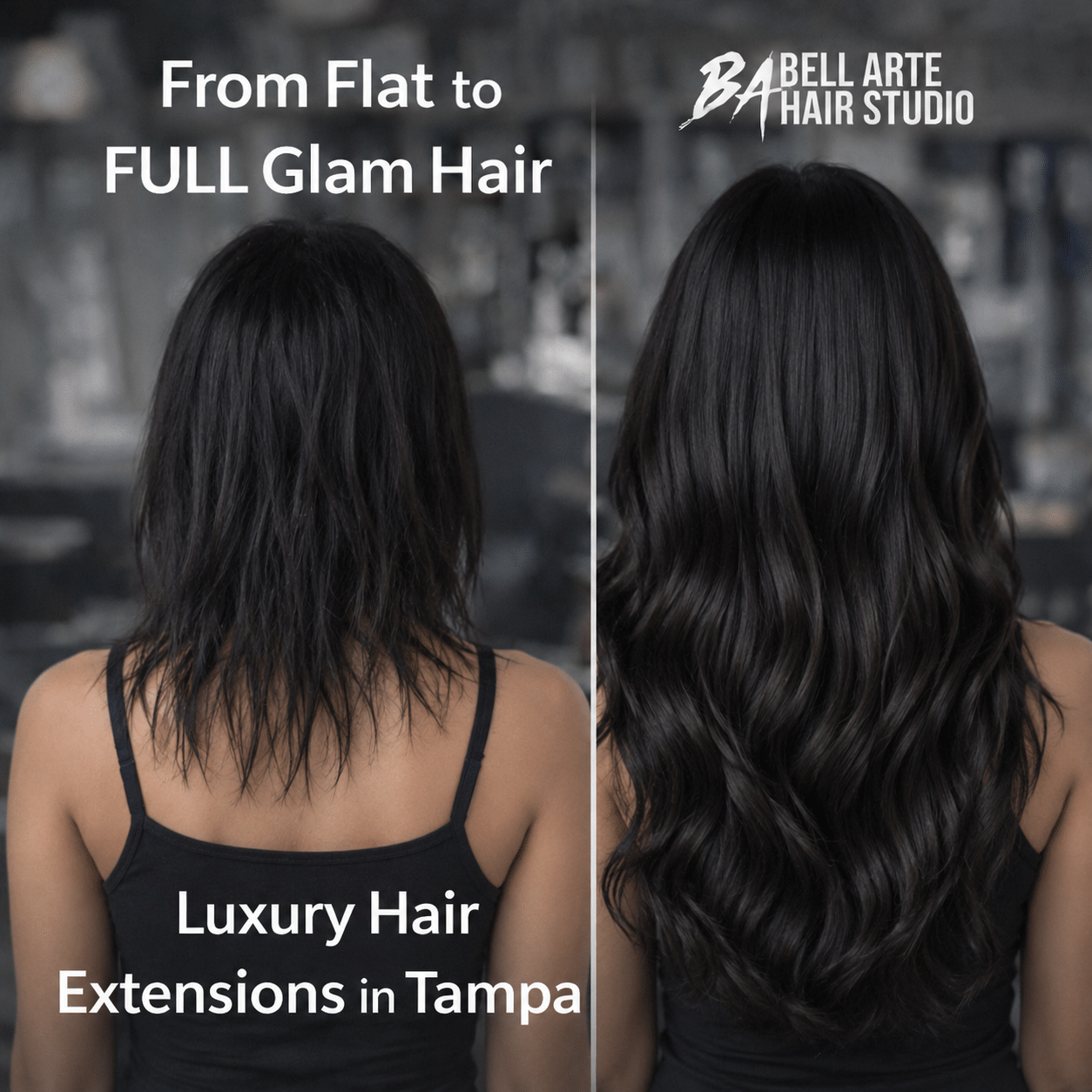
Bell Arte Hair Studio offers professional hair extensions in Tampa and customizes each installation around the client’s natural hair, lifestyle, and desired look.
Frequently Asked Questions About Remy Hair Extensions
What does Remy mean in hair extensions?
Remy describes human hair with cuticles that face the same root-to-tip direction. This alignment reduces friction, tangling, and matting.
Are Remy hair extensions real human hair?
Yes. Genuine Remy extensions use human hair. The term “Remy” specifically describes the directional alignment of the hair cuticles.
Are Remy extensions better than regular human hair extensions?
Quality Remy hair typically provides smoother movement, easier manageability, and less tangling because all the cuticles face the same direction. However, quality can vary among manufacturers.
Is Remy hair the same as virgin hair?
No. Remy describes cuticle alignment, while virgin hair generally describes hair that has never undergone chemical processing.
Can you wash Remy hair extensions?
Yes. You can wash Remy human hair extensions. Use gentle products, condition the hair properly, detangle carefully, and follow your stylist’s instructions for your specific extension method.
Can you use heat on Remy hair extensions?
Yes. You can style Remy human hair with heat. However, excessive temperatures can cause dryness and damage, so use a heat protectant and keep temperatures as low as practical.
Do Remy hair extensions tangle?
Any long hair can tangle, including Remy hair. However, aligned cuticles reduce friction and help quality Remy hair resist severe tangling and matting.
How long do Remy hair extensions last?
Hair quality, installation method, maintenance, washing, heat exposure, and styling habits all affect their lifespan. Proper professional maintenance can help your extensions last longer.
Looking for Remy Hair Extensions in Tampa?
Understanding what are Remy hair extensions helps explain why hair quality matters. Remy hair keeps the human hair cuticles facing the same direction, which helps create smoother movement, natural shine, less friction, and easier manageability.
At Bell Arte Hair Studio in Tampa, we specialize in premium human hair extensions and personalized extension services. We consider your natural hair density, texture, condition, desired length, volume, lifestyle, and maintenance preferences before recommending an extension option.
If you’re considering Remy hair extensions in Tampa, start with a professional consultation. We can evaluate your natural hair, discuss your goals, explain your options, and help you choose an extension method that fits your needs.
Beautiful extensions start with quality human hair, professional installation, proper placement, and consistent maintenance.